Why driveway extensions come up on Denver's larger lots
This is one of the more common calls we get from this side of the lake.
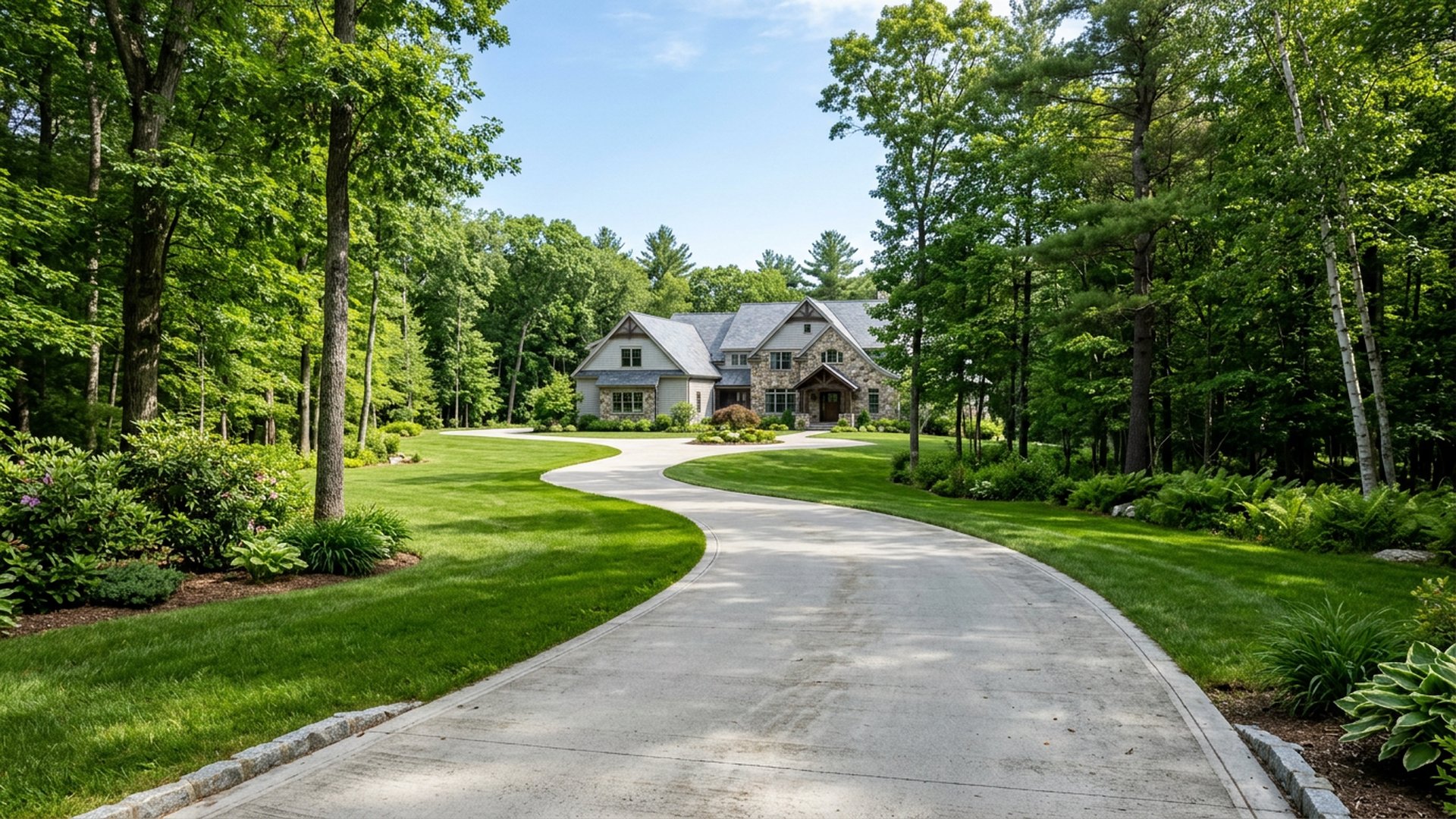
A driveway is sized by whoever built the house, for an assumed number of vehicles and an assumed way of using the property. On larger Denver lots there is frequently room to do considerably better than that assumption — and a household with more cars, a trailer, a boat or visitors regularly discovers the gap.
Three shapes cover most of it. An extension widens or lengthens what is already there. A turnaround means not reversing the length of a long drive onto a road. A parking pad is separate hard standing for something that does not need to be at the house.
All three are additions to an existing slab rather than replacements of it, which makes them a smaller job — and puts the whole technical question in one place.
Where new concrete meets old: the tie-in is the whole job
Everything that goes right or wrong with an extension happens at this joint.
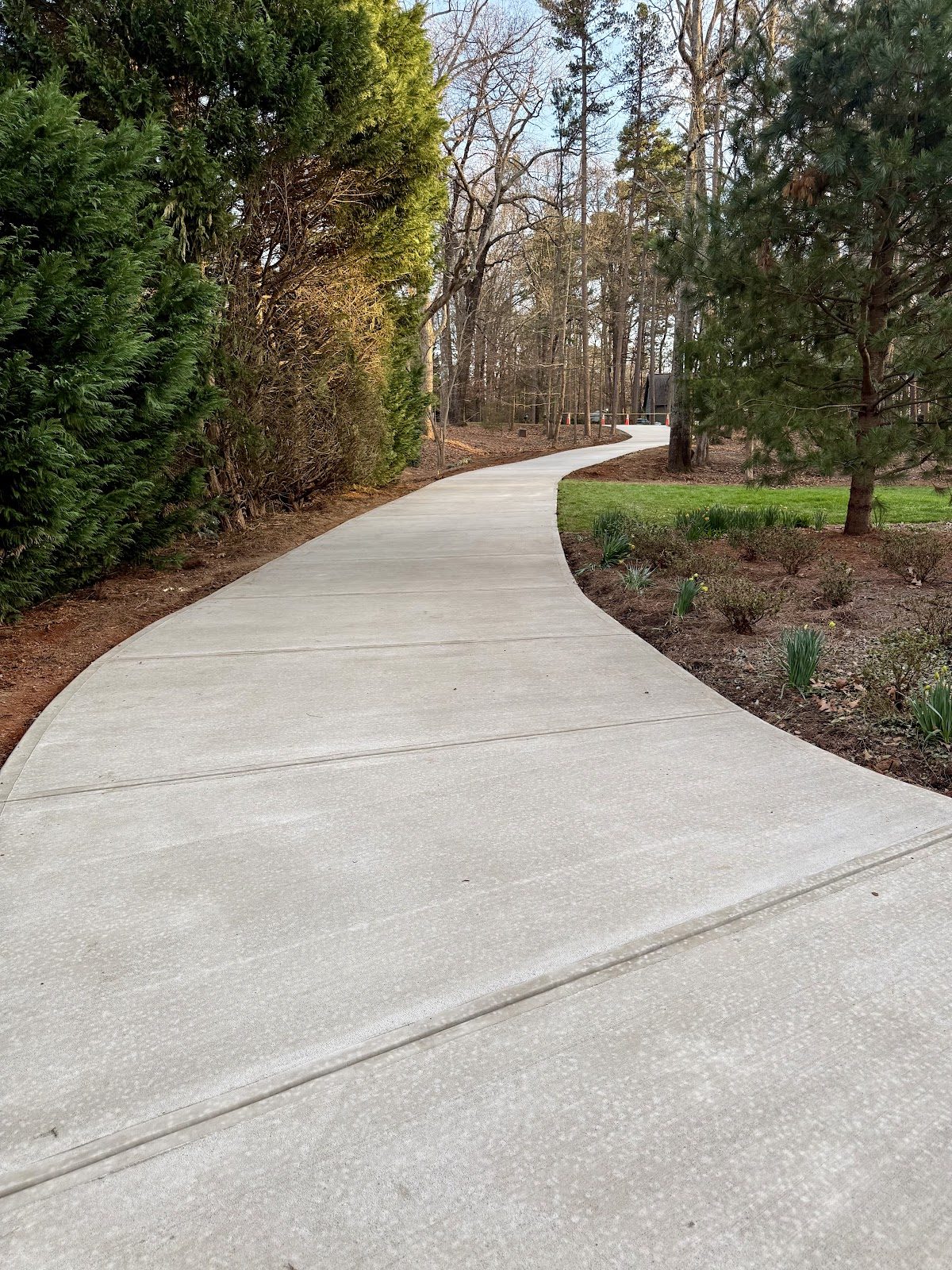
Two slabs poured years apart are two independent objects. They cure differently, they have different ages, and they sit on ground that may have been prepared to different standards. They will move relative to each other, seasonally, for as long as they both exist.
The honest approach is to control where that shows rather than pretending it will not. That means a deliberate joint at the meeting line rather than an attempt at an invisible weld. A planned joint is a detail; an unplanned crack a foot away from where the slabs meet is a defect, and it is the same movement either way.
The second question at the tie-in is what the new concrete sits on. An extension is an opportunity to prepare fresh ground properly, and it is worth taking — the new section will be judged against the old one, and if it moves first that is what you will remember.
Will new concrete match the old driveway?
This is the most common source of disappointment on extension work, and it is entirely avoidable by discussing it first.
New concrete does not match old concrete. It cures lighter, darkens over the following months, and lands somewhere near but not on the existing slab, which has had years of weather, traffic and red clay working on it. Anyone who promises an invisible match on plain gray is promising something the material does not do.
There are two honest routes. Accept the join, place it deliberately, and let the two sections read as what they are — which is often completely fine, particularly where the extension is a distinct element like a pad or a turnaround. Or unify the surfaces, by resurfacing both old and new so they share one finish. That costs more and it solves the problem properly.
A third consideration: if the existing drive is itself failing, an extension puts new concrete beside a problem instead of solving it. Our repair, resurface or replace guide covers how to assess what you already have, and replacement is sometimes the better use of the same money.
How to size a driveway extension, turnaround or pad
Cheap to get right at the planning stage, impossible to change afterwards.
| Element | The thing people underestimate |
|---|---|
| Extra parking width | Door clearance beside a parked vehicle, not just its width |
| Turnaround | The swept path of the vehicle, which is far larger than its footprint |
| Trailer or boat pad | The length of the tow vehicle plus the trailer, plus room to unhitch |
| Walkway alongside | Getting out of a car onto concrete rather than onto grass |
| Drainage | Added hard surface concentrates runoff that used to spread |
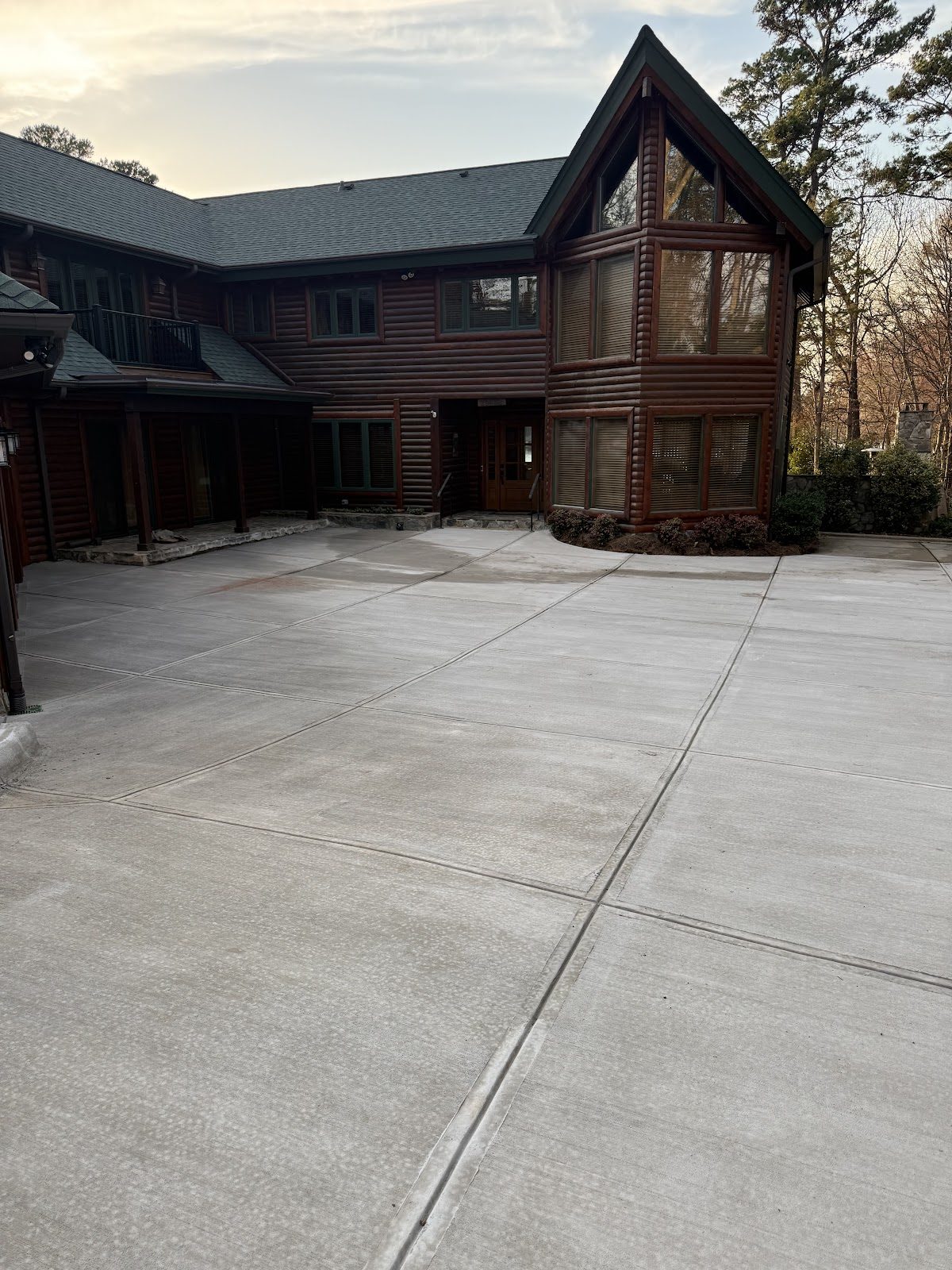
The cheapest tool here is marking paint or a hose laid on the ground. Park the vehicles where you think they will go, walk the route, try the turn. Ten minutes on the ground settles arguments that no drawing will.
What we build is on the driveways and walkways page, and the Denver page covers what we do on the west shore.
Extension questions.
Mostly about the joint, correctly.