
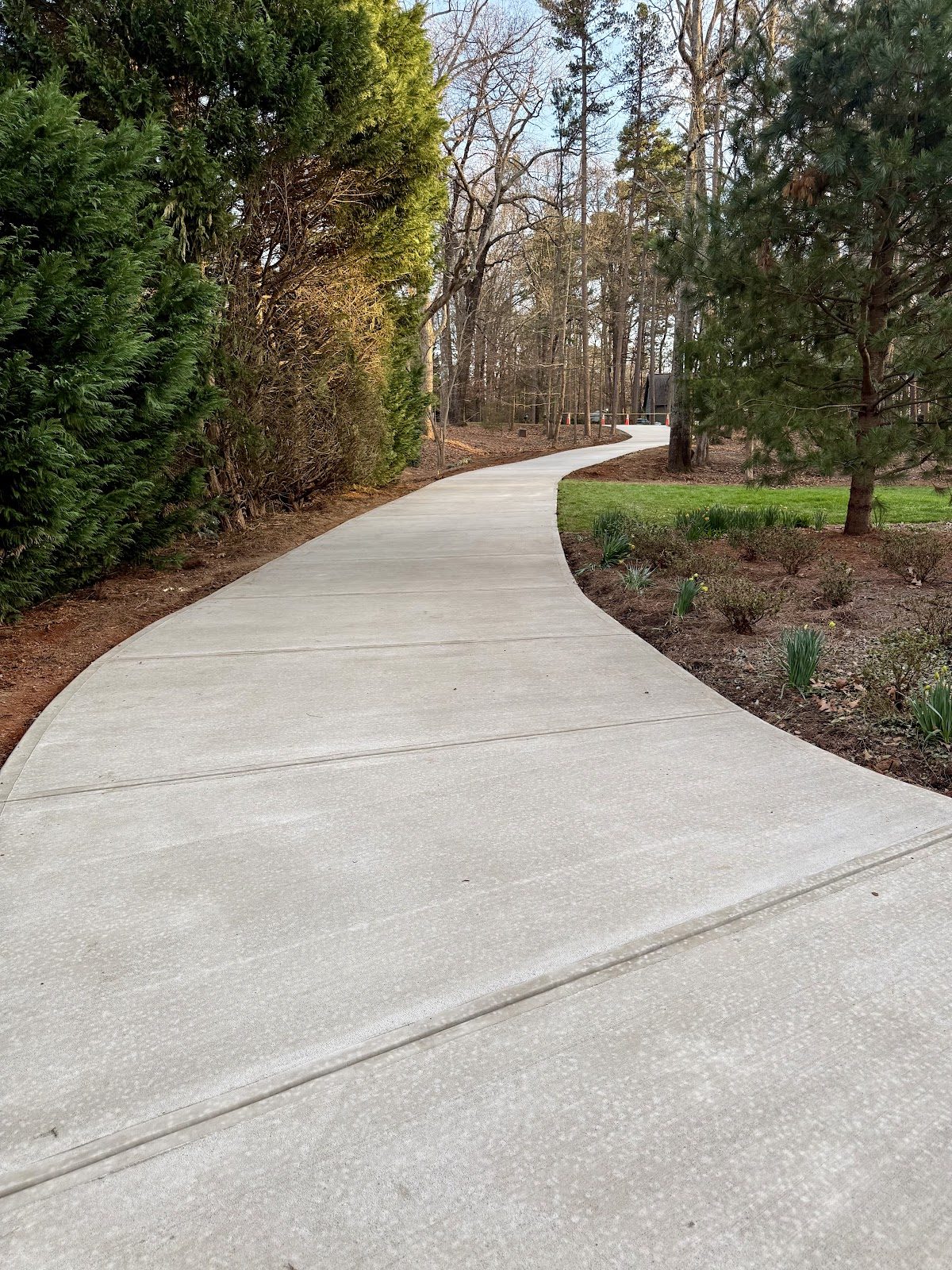
On a large lot the constraint is grading, not area
This is the practical difference between extending on a big Mooresville property and extending on a compact one.
Around The Point and across Mooresville's larger parcels, there is usually plenty of room for whatever you want to build. What there is not, usually, is level room. Ground that reads as gently rolling from a car is doing something quite specific once you try to put a flat surface on it.
So the cost of a large-lot extension sits mostly in the earthwork. Cutting into a rise means excavation and often something holding the cut face. Building out over a fall means fill, and fill has to be compacted properly or it moves — and a slab on moving fill moves with it. Following the fall means the surface is not level, which is fine for a drive and not fine for a parking pad.
None of that is exotic. It is simply where the money goes, and it is worth knowing so you can read a quote properly. An extension quote that does not mention the ground is quoting the concrete and hoping.
What people build: turnarounds, guest parking, boat pads
Large-lot extension work is fairly predictable in what it is asked to solve.
| Addition | Solves | Design question |
|---|---|---|
| Turnaround | Reversing the length of a long drive onto a road | The swept path of the vehicle, which is larger than people expect |
| Guest parking | Visitors blocking each other or parking on grass | Where it sits relative to the house and the walking route back |
| Boat / RV / trailer pad | Storing something large off the drive | Concentrated load, and an approach that works with a trailer |
| Widening or lengthening | Day-to-day capacity | Whether the ground stays level across the added area |
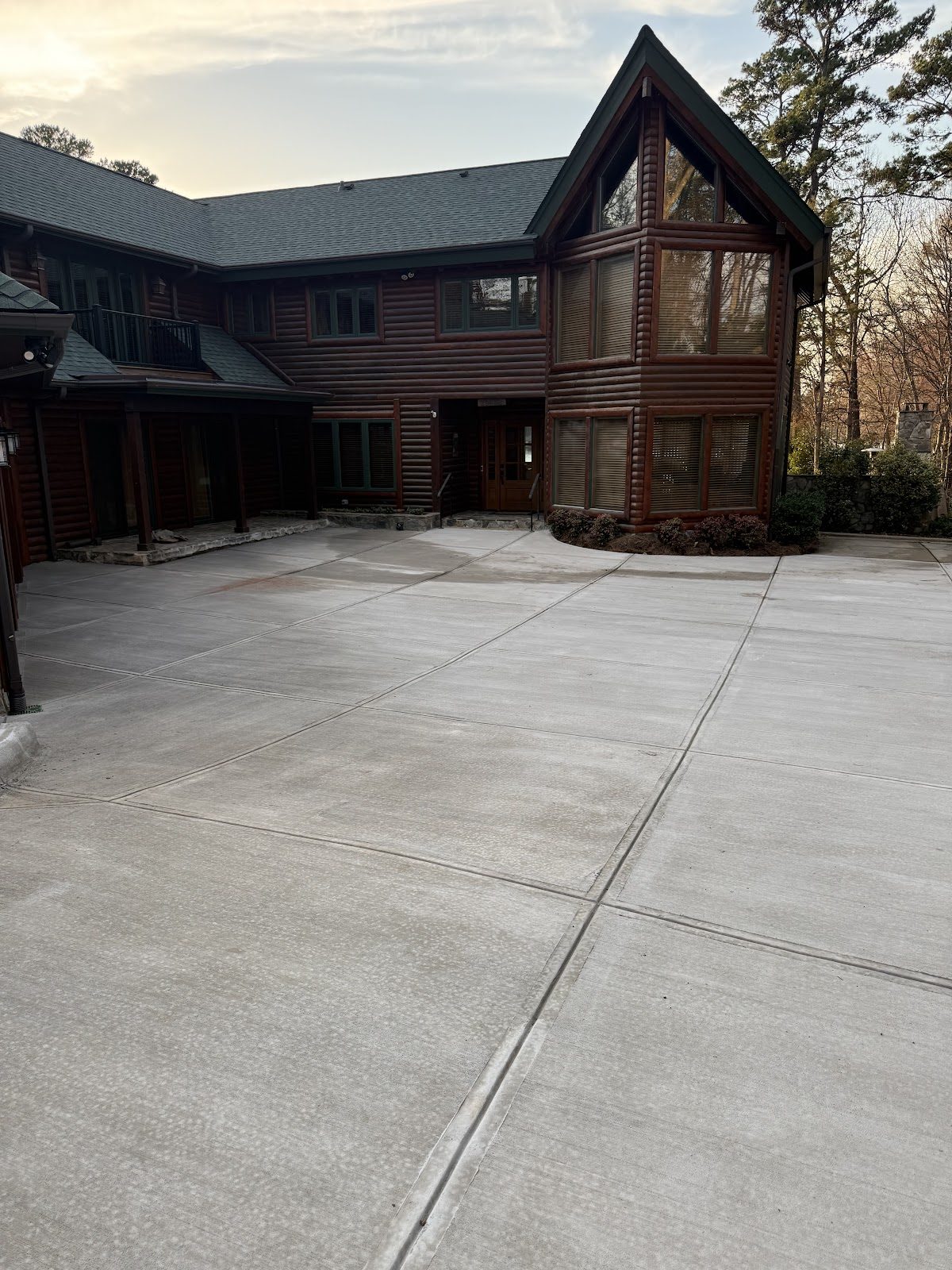
Where an addition should go on a big lot
On a big lot you have choices about placement, and they are worth using deliberately.
- Where the ground is already levelThe cheapest place to put a flat surface is where the ground is nearly flat already. It is worth walking the property looking for that rather than assuming the addition has to adjoin the existing drive.
- Where the truck can reachConcrete has to get to the pour. A pad at the far end of a long property may be simple ground but awkward access, and access is a real line item.
- Where water already goesAdding hard surface to the top of a slope sends more water down it. On a large lot there is usually somewhere sensible for that to go, but it should be a choice.
The tie-in detail — how new concrete meets an existing slab, and why the joint matters — is covered in our driveway extensions post, and applies here identically.
Mark it out before you commit to it
This costs nothing and prevents the most common regret on extension work.
The space a vehicle needs is not its footprint. A turning vehicle sweeps a much larger area than it occupies, a car with its doors open is considerably wider than a car, and a trailer needs room to be unhitched as well as parked.
Marking paint or a hose laid on the ground settles all of it in ten minutes. Park the vehicles where you think they should go. Try the turn. Walk from the parking spot to the door in the rain, mentally. Every one of those tests is free now and impossible after the pour.
What we build is on the driveways and walkways page, and what we do locally on the Mooresville page.
What to ask for in a driveway extension quote
On a large-lot extension the concrete is the predictable part. These are not.
- What happens to the groundCut, fill or follow — and if fill, how it is compacted. This is where the cost and the longevity both sit.
- How the concrete reaches the pourOn a long property the truck may not get close, and moving concrete beyond a chute is additional work that should be priced rather than absorbed.
- Where the water goesAdded hard surface on sloping ground concentrates runoff. A quote that has thought about it is a quote from somebody who walked the site.
Large-lot extension questions.
Grading, siting and sizing.