
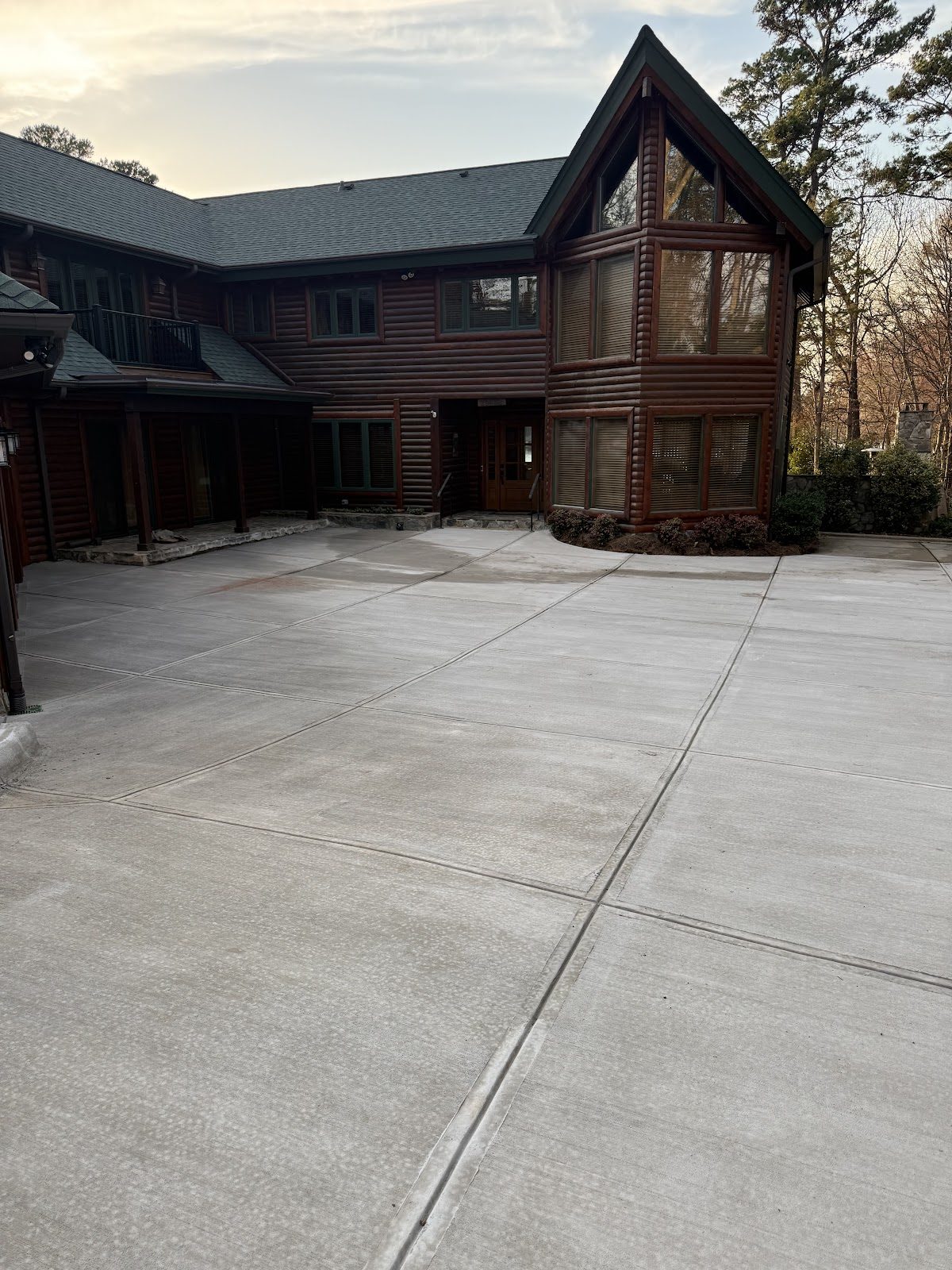
Find the lot lines and setbacks before designing anything
This is the step people skip, and it is the one that decides what is possible.
On a compact lot the constraint is rarely the concrete — it is the setbacks, the lot lines and any easements crossing the property. All three are specific to your parcel, and none of them are reliably where you think they are. Fences in particular are frequently not on boundaries, having been put up by somebody who also estimated.
So the first question on any widening is not how wide, it is how wide is available. That is a survey and covenant question rather than a concrete one, and it is worth settling before designing anything, because the answer occasionally rules out the plan entirely and more often just moves it.
Cornelius adds a second layer in covenanted communities, where an association may have a view about driveway width and about how much of a front garden becomes hard surface. Our decorative approval post covers the submittal side.
Driveway widening options when the lot is compact
The instinct is to widen the whole drive. On a tight lot that is often the most expensive way to solve the smallest amount of the problem.
| Option | Best when | Watch |
|---|---|---|
| Full-length widening | You genuinely need two vehicles side by side throughout | Uses the most area and the most of your setback allowance |
| Flare at the garage | The pinch point is maneuvering near the house | Often delivers most of the benefit for much less area |
| Flare at the road | Turning in and out is the difficulty | Changes at the road may involve the entrance — check the permit question |
| Separate parking pad | There is room somewhere the driveway is not | Needs a sensible walking route back to the house |
| Widened apron only | Getting past a parked car is the problem | Small area, disproportionate practical gain |
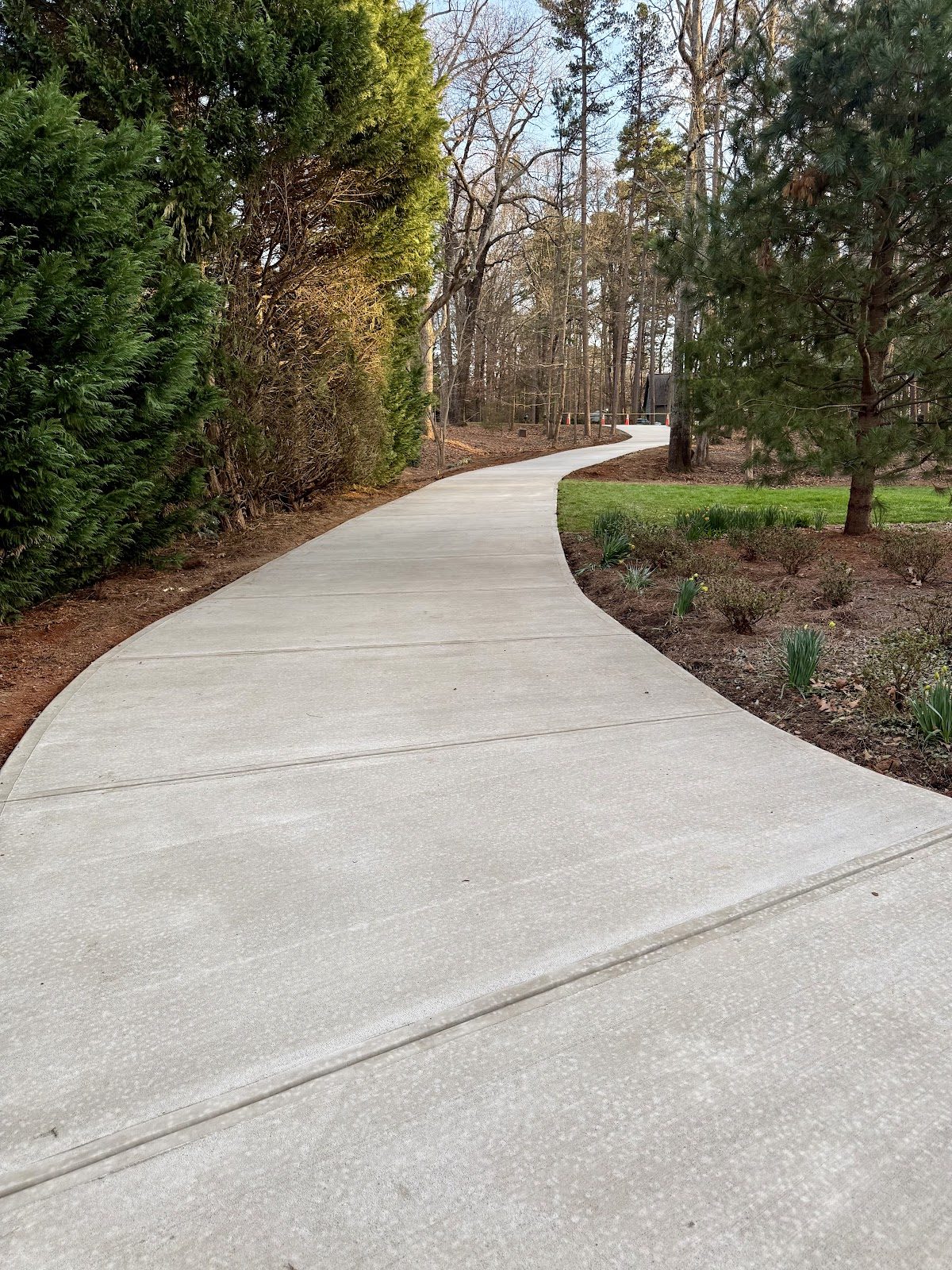
The join between old and new concrete on a widening strip
This is the technical difference between widening and extending, and it is worth understanding.
An extension adds concrete at the end of a drive, so the join between old and new is one line across the width. A widening adds a strip along the side, so the join runs the entire length of the driveway and sits right in your field of view every time you walk up to the house.
Two slabs poured years apart move independently, so there will be a joint. The question is whether it is a deliberate one. A planned joint along the meeting line is a detail; an unplanned crack running parallel to it a few inches away is a defect.
Color is the other consideration, and it is more visible here than on an extension for the same reason — a long adjacent strip invites comparison in a way that a section at the far end does not. If matching matters, resurfacing both old and new so they share one finish is the reliable answer.
Drainage when you add hard surface on a compact lot
The consequence of added hard standing is proportionally larger on a small lot.
Every square foot of new concrete is a square foot that no longer absorbs water. On a large lot the runoff has somewhere to spread. On a compact Cornelius lot the boundary is close, the neighboring property is close, and water that used to soak into a strip of grass now arrives somewhere as a flow.
It is a solvable problem and an unpleasant surprise, in that order. Where the water goes should be part of the design rather than something discovered in the first heavy rain, and it is also the sort of thing a neighbor remembers.
What we build is on the driveways and walkways page, and what we do locally on the Cornelius page.
Before you widen, check the problem is width and not layout
Worth thirty seconds of skepticism before spending money on concrete.
A surprising number of driveway complaints on compact lots turn out to be about sequence rather than space — which car has to move for which, and how often. Sometimes the fix is a small pad in a different place, or a widened apron so one vehicle can pass another, rather than a wider driveway along its whole length.
The test is to notice where the frustration actually happens over a week. If it is always at the same point, that point is the job. Widening everything to solve a problem that occurs in one place is the most common overspend on a tight lot.
Widening questions.
Setbacks, joins and water.