4.7 ★ on GoogleCarolina Custom Concrete
Lake Norman, NC · Insured concrete contractor
Concrete Driveway Contractors — Lake Norman & North Charlotte
Custom driveways, extensions, aprons, turnarounds and front walks — broom, exposed aggregate, color or stamped. Free written estimates.
InsuredFree written estimates
SureCrete systemsWallStamp · WallSpray
(704) 966-9268Call or text
What are we building?
Pick the closest match — we will get the specifics when we walk the job.
We respond in less than 2 hours
01 · Finishes
Four ways to finish a driveway
Finish is the decision you actually make. Everything under it is the same concrete.
Broom is the default and the right answer for most drives. The texture is pulled across the fresh surface, so it costs nothing extra to produce, grips when wet and needs no maintenance.
Exposed aggregate washes back the surface paste to reveal the stone underneath. More labor at finishing, more visual texture, more grip.
Color and stain puts pigment through the slab or into its surface. Acid stain gives mottled, translucent color that varies across the pour, so no two driveways read the same.
Stamped presses a pattern in — slate, brick, paver, tile, stone or wood — with a pigmented base color and an accent for depth. Published per-square-foot comparisons run plain concrete at $9–$16 against stamped at $14–$24, which is the honest way to think about the step up.
02 · Selected work
Driveways we have poured
Captions say the service and the finish.
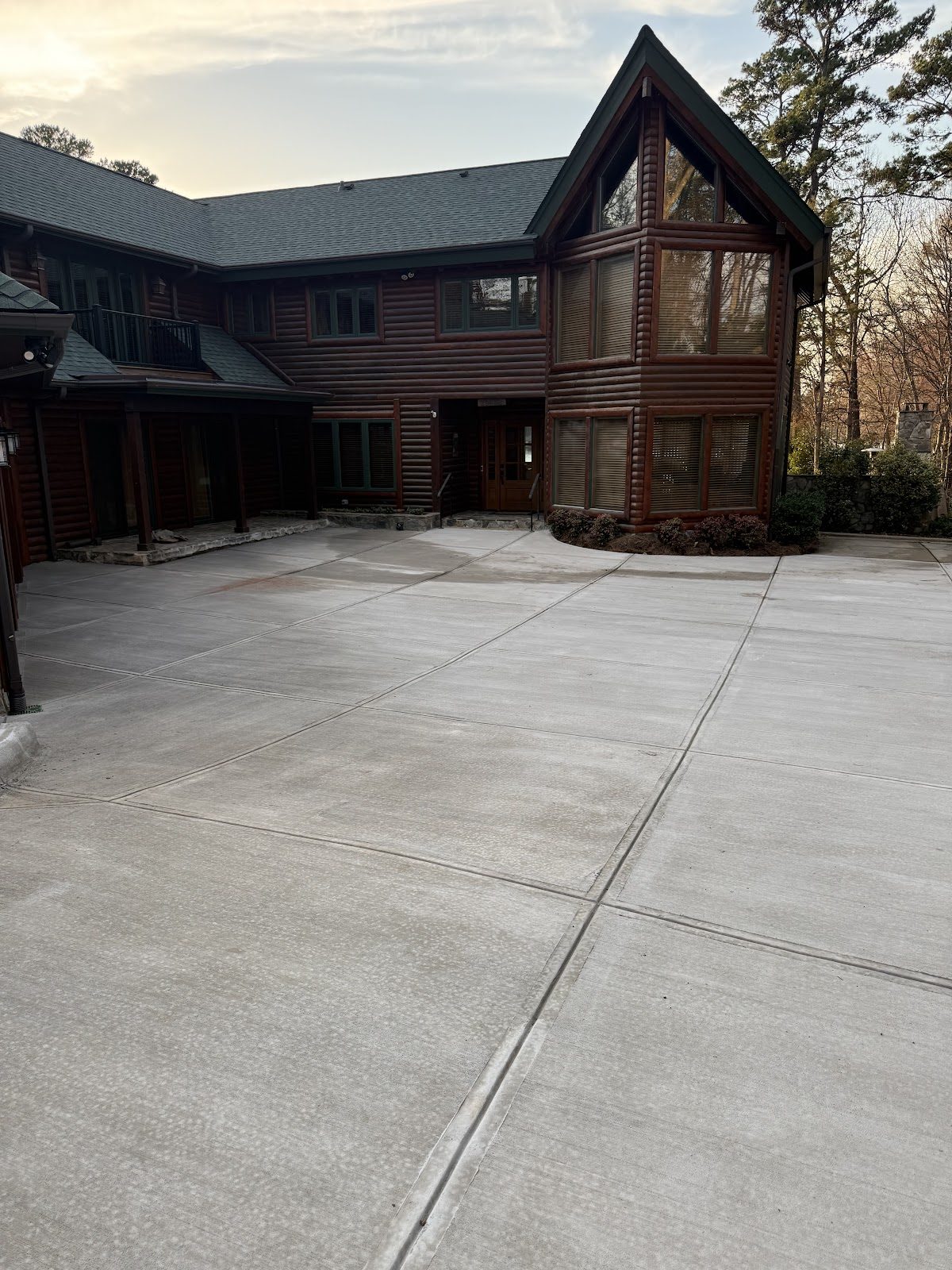
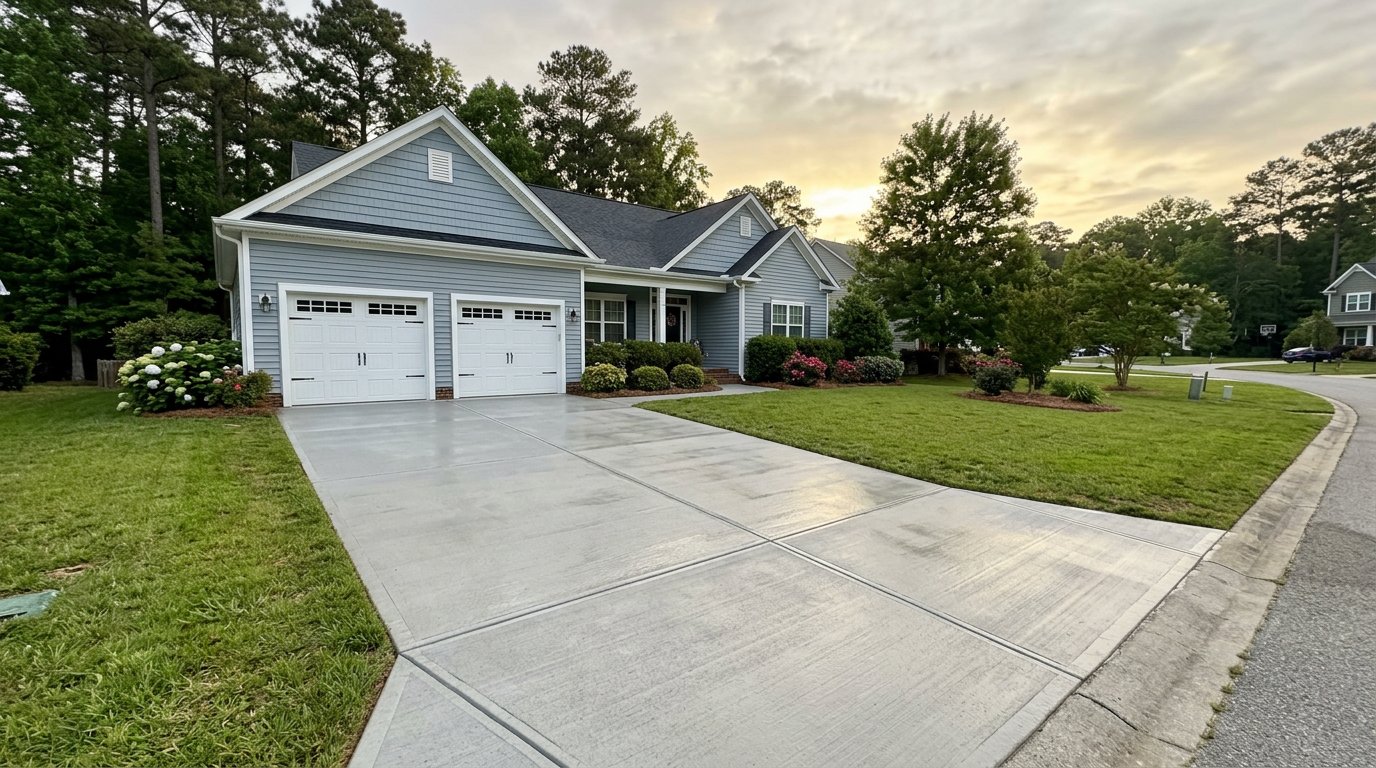
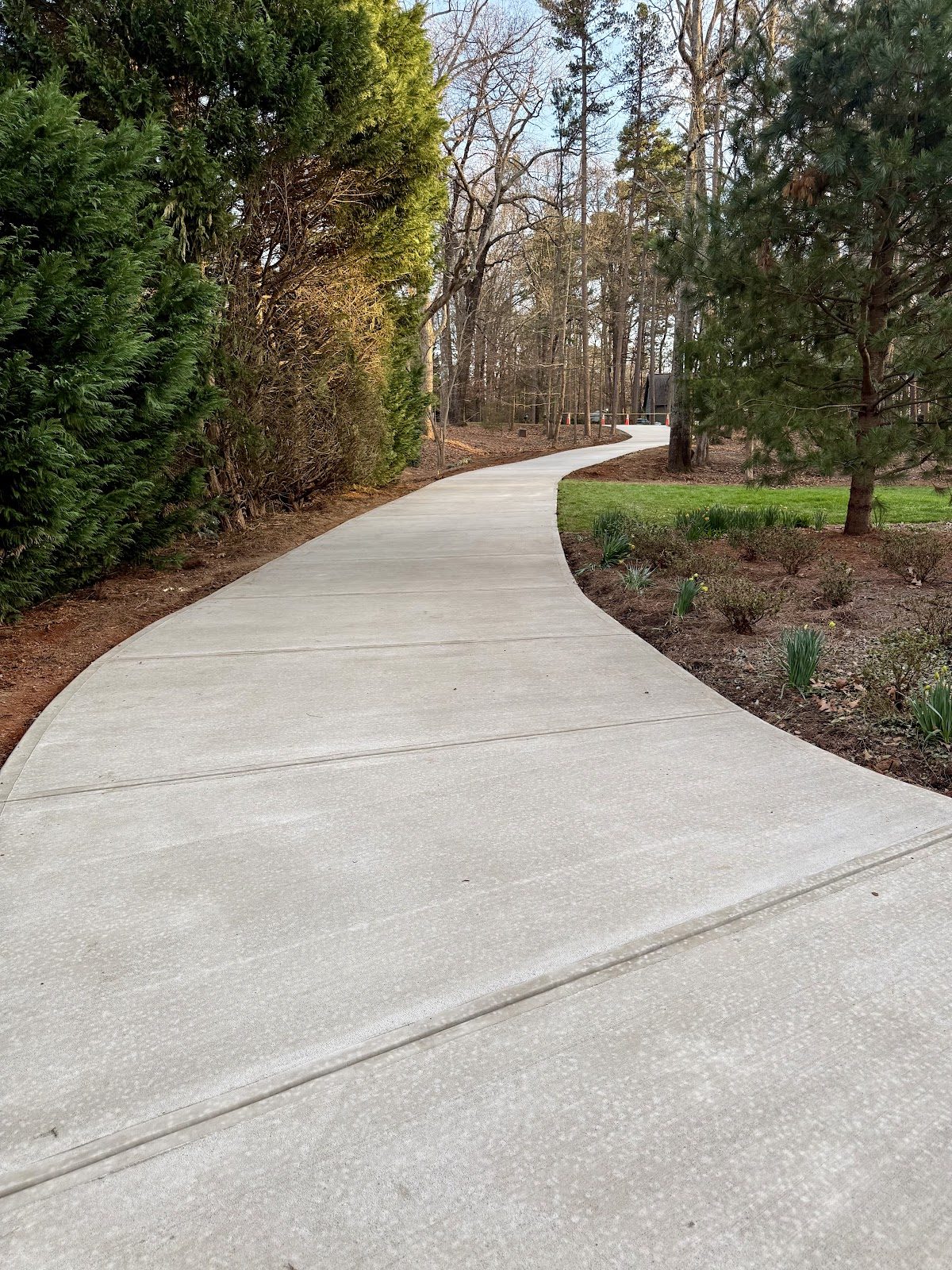
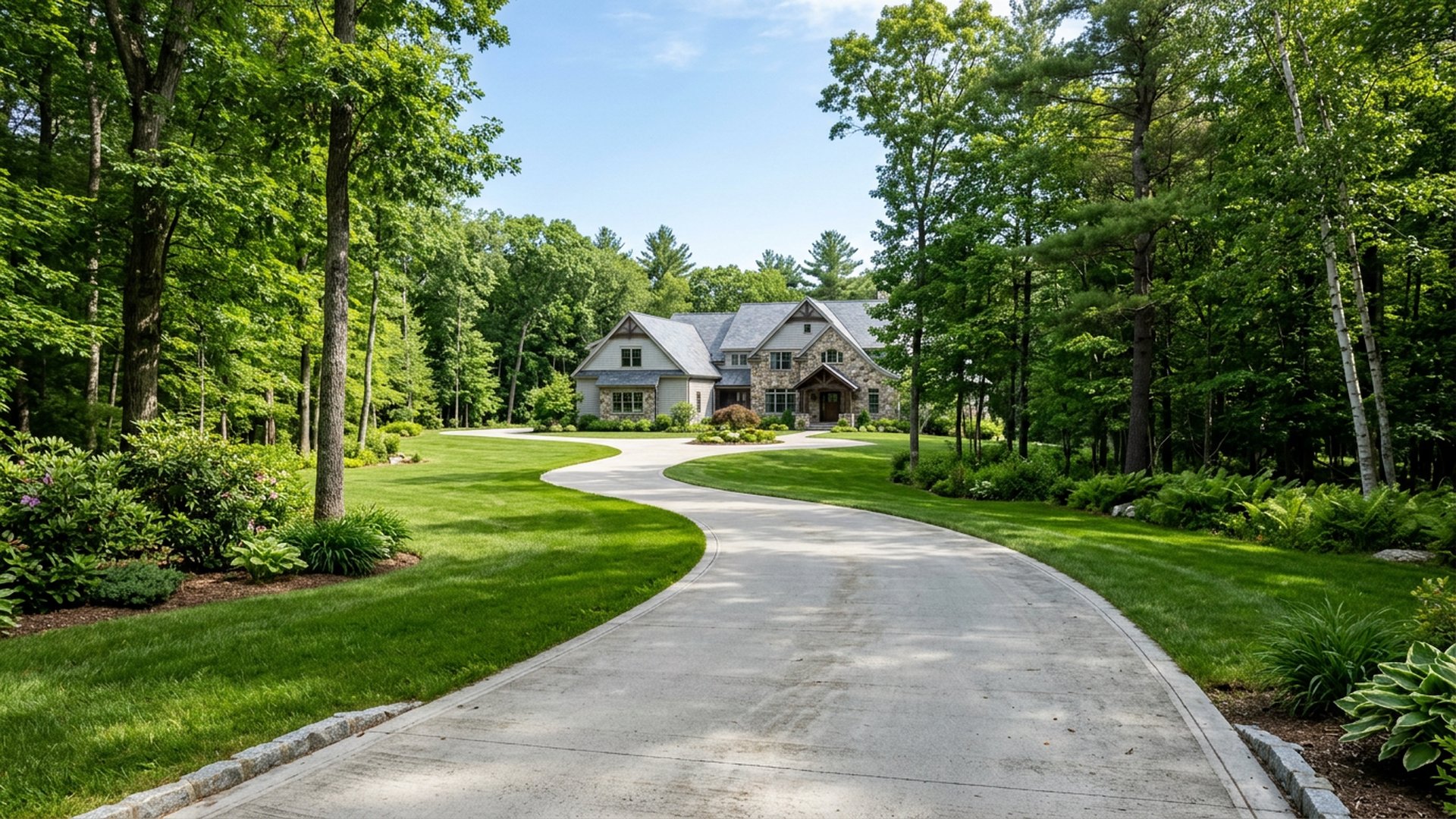
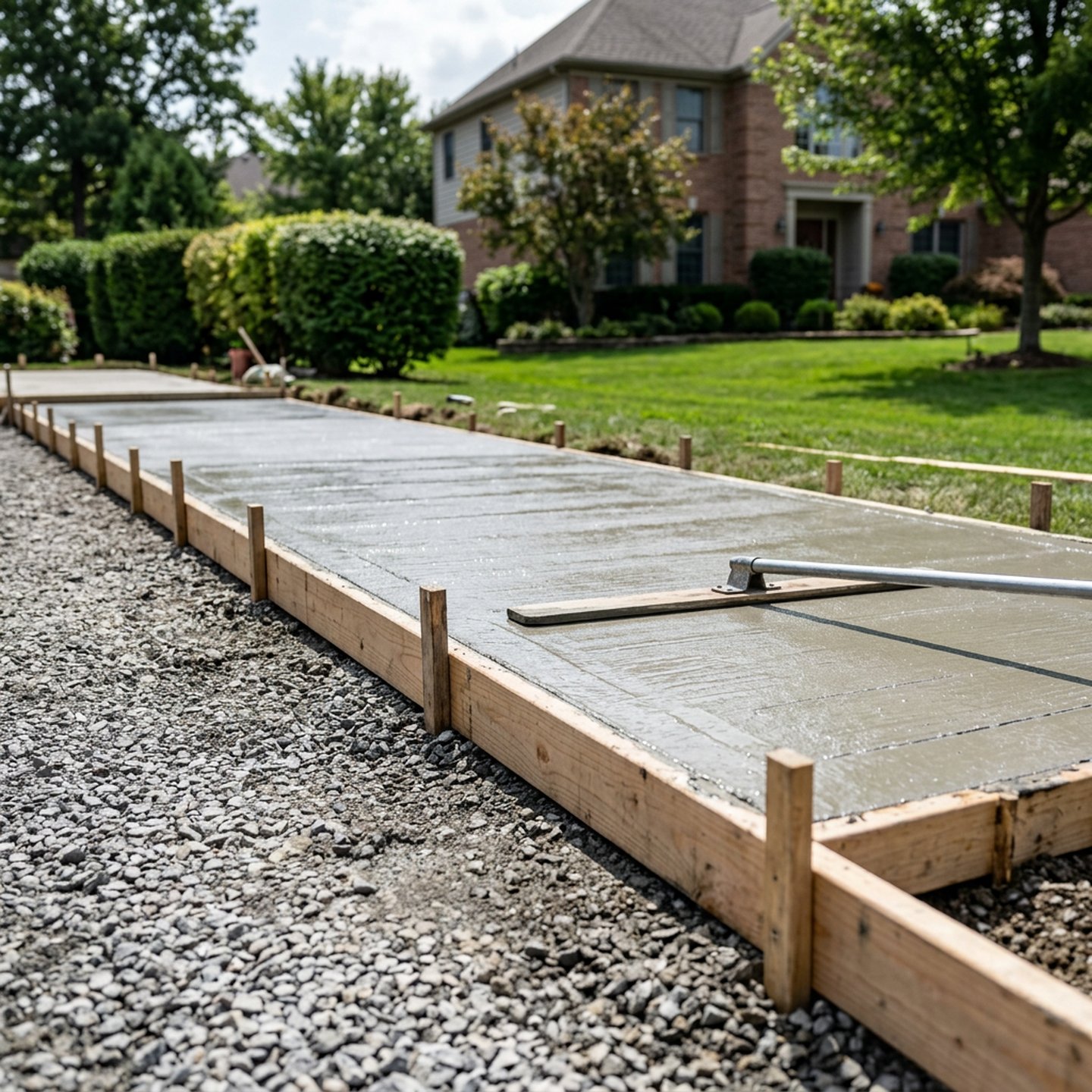
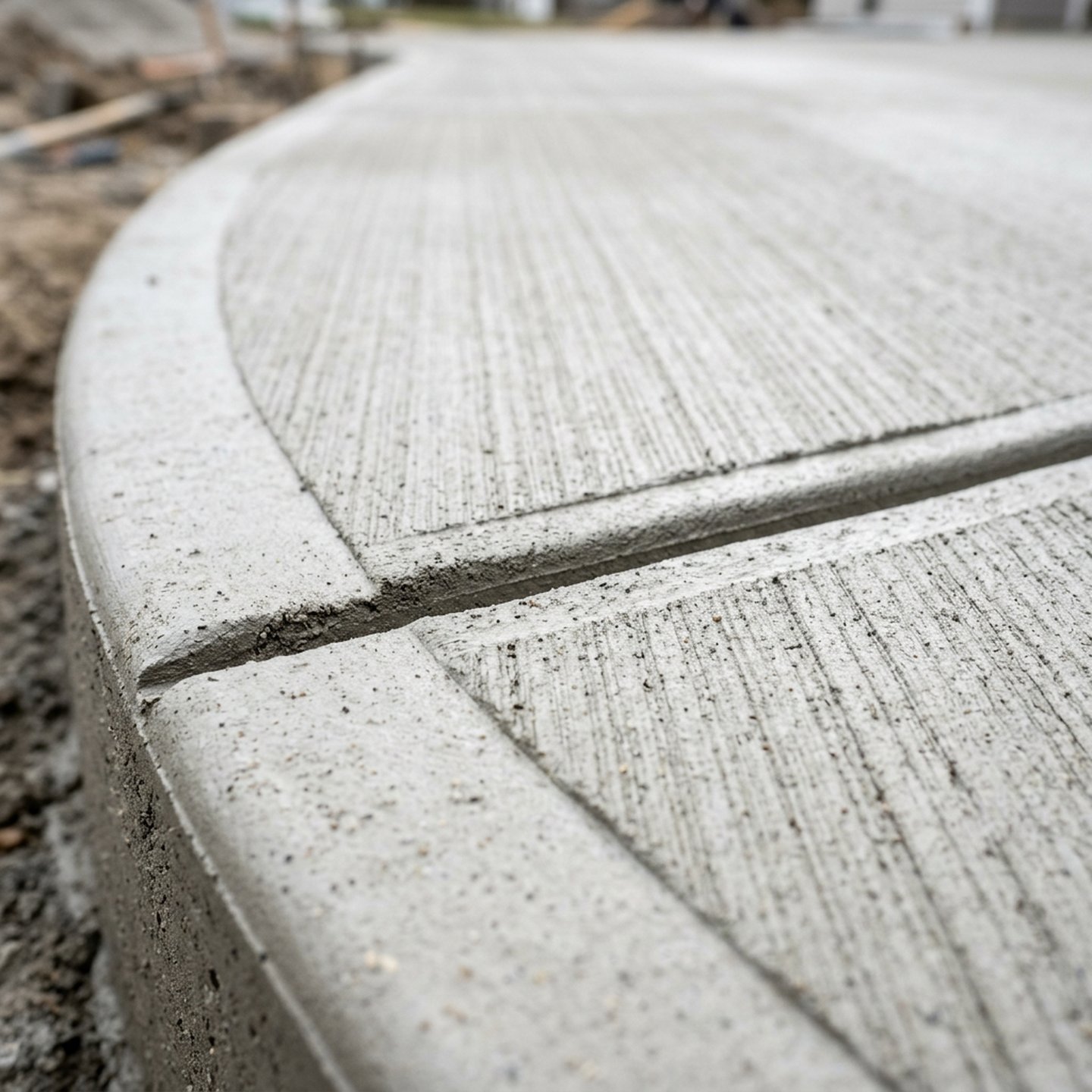
Broom · stamped · stained · sealedHuntersville · Cornelius · Davidson · Mooresville · Denver
03 · New or replacement
Which job you are actually buying
The two look identical when finished and price very differently, because one of them is two jobs.
A new driveway on open ground is a single sequence: grade, form, pour, finish. A replacement adds demolition, haul-away and cutting the sub-grade back before any of that starts, and published figures put that removal premium at roughly $1–$6 per square foot on top.
Walkways and front paths sit alongside either. They are what most people actually look at on the way to a door, and pouring them in the same finish as the drive is what makes a frontage read as one piece of work rather than three separate decisions.
We also pour concrete driveways in Charlotte NC — the northern neighborhoods, Highland Creek through University City — and the north Charlotte page covers what changes there.
04 · Built for this ground
Lake Norman sits on red clay.
Cecil soil is the North Carolina state soil and it runs under most of this county. It swells wet and shrinks dry, and the Piedmont gets dozens of shallow freeze–thaw cycles a winter rather than one long freeze.
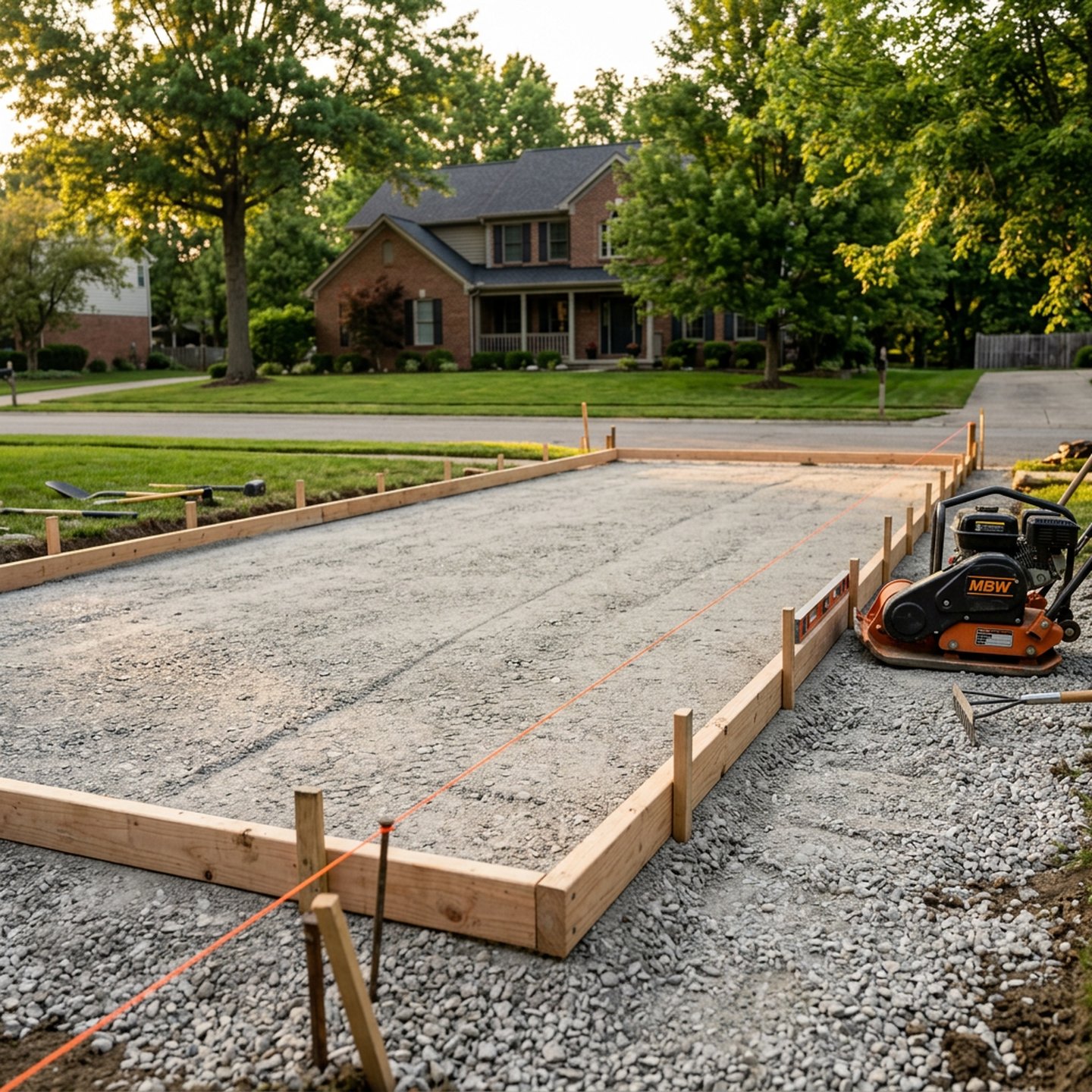
The base
The base carries the slab
Clay moves; a compacted aggregate base does not. It is graded to drain so water runs off the sub-grade rather than collecting under the pour.
Compacted base · graded to drain
The joints
Cracks go where we cut them
All concrete moves. Control joints decide where it opens, so the hairlines land in the joints instead of across the middle of the drive.
Sawcut & tooled control joints
The tie-in
Aprons take the beating
The strip where a drive meets the street carries the most traffic and the most water. A new or widened entrance onto a state road needs an NCDOT permit.
NCDOT permit · new or altered access
05 · Driving on it
Two days, seven days, twenty-eight
The most-asked question about a new pour, and the one most sites answer with a single number that is not quite true.
The canonical answer across the trade is walking on it at about two days, driving a car on it at about seven, and keeping heavy vehicles — skips, delivery lorries, RVs — off for twenty-eight. Those figures come from national publishers such as Concrete Network and Angi, and they describe typical conditions rather than yours.
What moves them here is heat and humidity. A Piedmont July and a Piedmont March are different curing environments, and the pour season running roughly March to November exists for that reason. So we give you the schedule for your own pour when it is booked, rather than repeating a chart number and hoping.
The thing worth knowing: concrete does not stop gaining strength at twenty-eight days. That is simply the point at which the standard test is taken.
06 · Cost
What actually moves the number
We do not publish prices, because a price for a driveway that nobody has seen is a guess. What we can do is tell you which factors decide it.
Tear-out, access for a ready-mix truck, what the sub-grade turns out to be, the finish, and the tie-ins at the street. Square footage matters least of the six, which surprises people.
For scale, the commonly published national range for a new concrete driveway runs about $8–$20 per square foot, and Angi puts the average driveway around $6,400. Those are published national figures, not our prices.
07 · Straight answers
Driveways, answered.
What people ask before a pour.
How long before I can drive on a new driveway?
The canonical answer across the trade is walking on it at about two days, driving on it at about seven, and keeping heavy vehicles off for twenty-eight. Heat and humidity move that, so ask us for the schedule on your own pour rather than working from a chart.
What finish should I choose for a driveway?
Broom, for almost everyone. It is the standard because the texture comes from the finishing process itself — grip when wet, nothing to maintain. Exposed aggregate, color and stamping all sit above it and all cost more, and on a driveway they are an aesthetic decision rather than a performance one.
Is a new driveway different from a replacement?
Very. A new pour on open ground has no old slab to break out and haul away, which is the most expensive line on a replacement bill. If there is already concrete where the new drive is going, the replacement page is the one you want.
Do you do walkways and front paths too?
Yes — front walks, side paths, porch steps and the approach from a drive to a door. They are usually poured with the same finish as the drive so the property reads as one piece of work rather than three.
Can you widen my existing driveway?
Yes. Extensions are a first-time pour on open ground, so no tear-out — the work is in tying new concrete into the old slab so the two move independently. The tone will not match exactly and it is better to see that in advance.
What about the apron where it meets the street?
It takes the most traffic and the most water on the whole property, so it is priced explicitly rather than assumed. Cutting a new entrance or widening one at a state-maintained road also needs an NCDOT permit; replacing in place generally does not.
08 · In their words
Driveway owners, verbatim.
Quoted word-for-word from Google reviews of our work — 4.7 across 52 reviews.
“We love our new driveway, walk and pad! They were able to show up, give a competitive estimate and start and finish the work quickly and with precision. Many neighbors have expressed how great the finished project looks!”
“This company was quick to respond when I reached out! They were easy to work with and kept me in the loop. They added onto our driveway and it looks great!”
09 · Related guides
Keep reading.
10 · Free estimate
Tell us what you are pouring.
We walk the site, measure it and put a number in writing. Free, and specific to your driveway rather than to a national average.
(704) 966-9268- Free written estimate
- Fully insured
- Call or text, seven days
Huntersville · Cornelius · Mooresville · Denver · Concord · North Charlotte · Troutman · Statesville