4.7 ★ on GoogleCarolina Custom Concrete
Lake Norman, NC · Insured concrete contractor
Concrete Repair for Driveways, Patios & Walkways
Cracked, sunken or flaking concrete. We will tell you honestly whether it is a repair, a resurfacing or a replacement — including when the answer costs us the bigger job.
InsuredFree written estimates
SureCrete systemsWallStamp · WallSpray
(704) 966-9268Call or text
What are we building?
Pick the closest match — we will get the specifics when we walk the job.
We respond in less than 2 hours
01 · The decision
Repair, resurface, or replace.
Almost every call about damaged concrete is really one question: has the slab moved, or does it just look bad?
If the concrete is structurally sound and the problem is on the surface — staining, dullness, flaking, wear — you are in repair or resurfacing territory, and both cost less than taking the slab out and starting again. If the ground underneath has shifted, and the slab is following it, then nothing laid on top will hold. An overlay over a moving base cracks again along the same lines within a season or two.
The honest version of this conversation sometimes costs us the larger job, which is exactly why it is worth having before anyone quotes anything.
3
Options
Repair, resurface, replace.
1
Question
Has the slab actually moved?
4.7
On Google
Carolina Custom Concrete.
02 · What we look at
Reading a failing slab
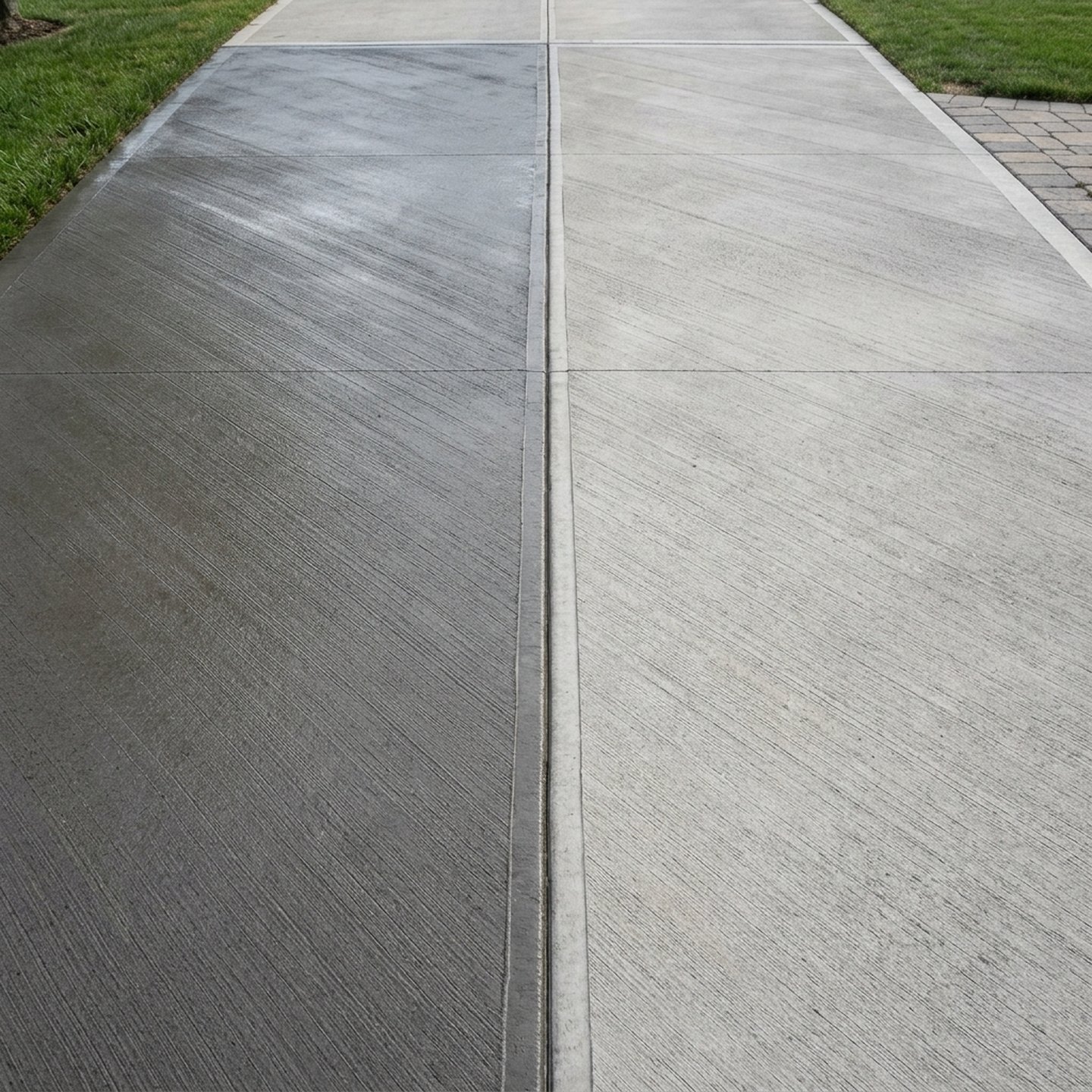
The symptoms point fairly reliably at the cause, and the cause decides the job.
Hairline cracks in the joints — the joints working as intended. Not a defect.
Cracks across the field, widening yearly — movement underneath. Filling them buys a season; they reopen because the cause is not at the surface.
Surface flaking and spalling — usually freeze–thaw damage to the top layer. Structural concrete underneath is often fine, which makes this a resurfacing candidate.
Sunken or rocking panels — the sub-grade has gone. Isolated panels can be cut out and repoured; a run of them is telling you about the base.
Edges dropping away from an apron — the tie-in has lost support, which is where water concentrates.
03 · Driveway repair
Driveway repair
Most of the repair work we do is on driveways, because a driveway takes vehicle loads, street runoff and the apron tie-in all at once.
The common calls: a corner panel that has dropped at the apron, a crack that has opened across two panels, a surface that has flaked where the car sits and drips, and edges that have broken away where a tire keeps going over them.
What decides the job is the same question as anywhere else — has the slab moved, or does it just look bad. A driveway that still sits flat and drains is a repair or a resurfacing job. A driveway with panels rocking underfoot, or an apron that has separated from the street, has lost its base, and that is a replacement conversation — covered on the replacement page.
Most driveway repair calls from Huntersville come from newer subdivisions whose slabs are showing their first real movement; on the older streets the question is more often whether the original concrete is worth keeping. Either way, we say which one it is on the site walk, and the estimate is written.
04 · Crack repair
Crack repair
Not every crack is a repair. Concrete cracks; the question is where and why.
Hairlines sitting in the control joints are the joints doing their job and need nothing. A stable crack across the field — one that has not widened in a year — can be routed, cleaned and filled so water stays out of it. That is the whole point of crack repair: water in a crack is what turns a cosmetic line into a freeze–thaw failure.
A crack that is still moving cannot be fixed at the surface. Whatever is opening it — settling backfill, a root, water washing out the base at an apron — is still opening it, and any filler will split along the same line by the following spring. On those we look for the cause first. If the cause can be dealt with and the slab still sits flat, the crack gets sealed afterwards. If the slab has dropped on one side of the crack, it is a sunken-slab problem, below.
On a decorative surface, crack repair is also a color-matching problem. A filled crack on a broom finish disappears; on a stamped or stained field it does not, and the honest options are concrete resurfacing over the whole area or living with the line.
05 · Sunken or uneven slabs
Sunken or uneven slabs
A slab that has settled is telling you about the ground, not the concrete. The useful question is whether it is worth lifting or worth replacing.
One panel sitting lower than its neighbor, a step at a joint, water pooling where it used to run off. Around Cornelius that is often lake-side fill that has kept compacting years after the house was built; around the rest of the lake it is red clay swelling and shrinking under a base that was never properly compacted.
If a slab has settled, here is what to weigh before deciding. Whether it is one panel or a run of them. Whether the concrete itself is sound or also cracked through. Whether the slab is decorative and worth preserving. And whether the base has finished moving. Lifting a settled slab back into place — mudjacking or foam leveling — makes sense for a single sound panel with a trip edge, where the slab is worth keeping and the ground under it has stopped. It makes less sense where the concrete is cracked through as well, where several panels have gone, or where the base is still moving, because a lifted slab over a live base settles again.
Where lifting is not the answer, isolated panels can be cut out and repoured on a rebuilt base, which is far smaller than a full tear-out. A run of sunken panels, or a slab that has both settled and cracked through, is a replacement. We will tell you which of those you are looking at, and if lifting is the right call we will say so.
06 · Built for this ground
Why concrete fails here.
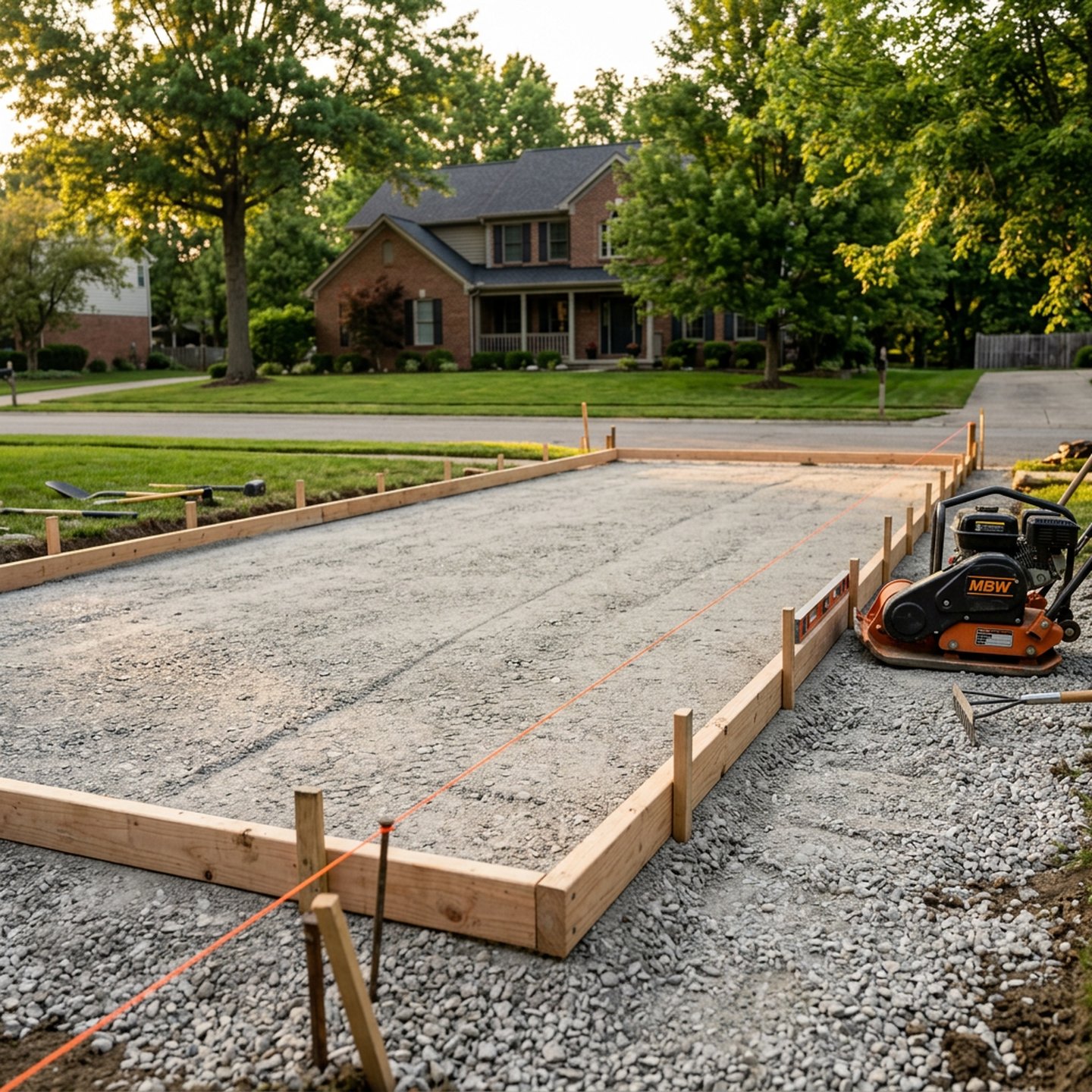
Cecil soil is the North Carolina state soil and runs under most of this county. It swells wet and shrinks dry, and the Piedmont gets dozens of shallow freeze–thaw cycles a winter rather than one long freeze — so the sub-grade and the surface are attacked by two different mechanisms.
Underneath
Clay moves, concrete follows
Swelling and shrinking clay lifts and drops whatever sits on it. A compacted, drained base is what stops the slab tracking that movement.
Compacted base · graded to drain
Where it opens
Joints decide the crack line
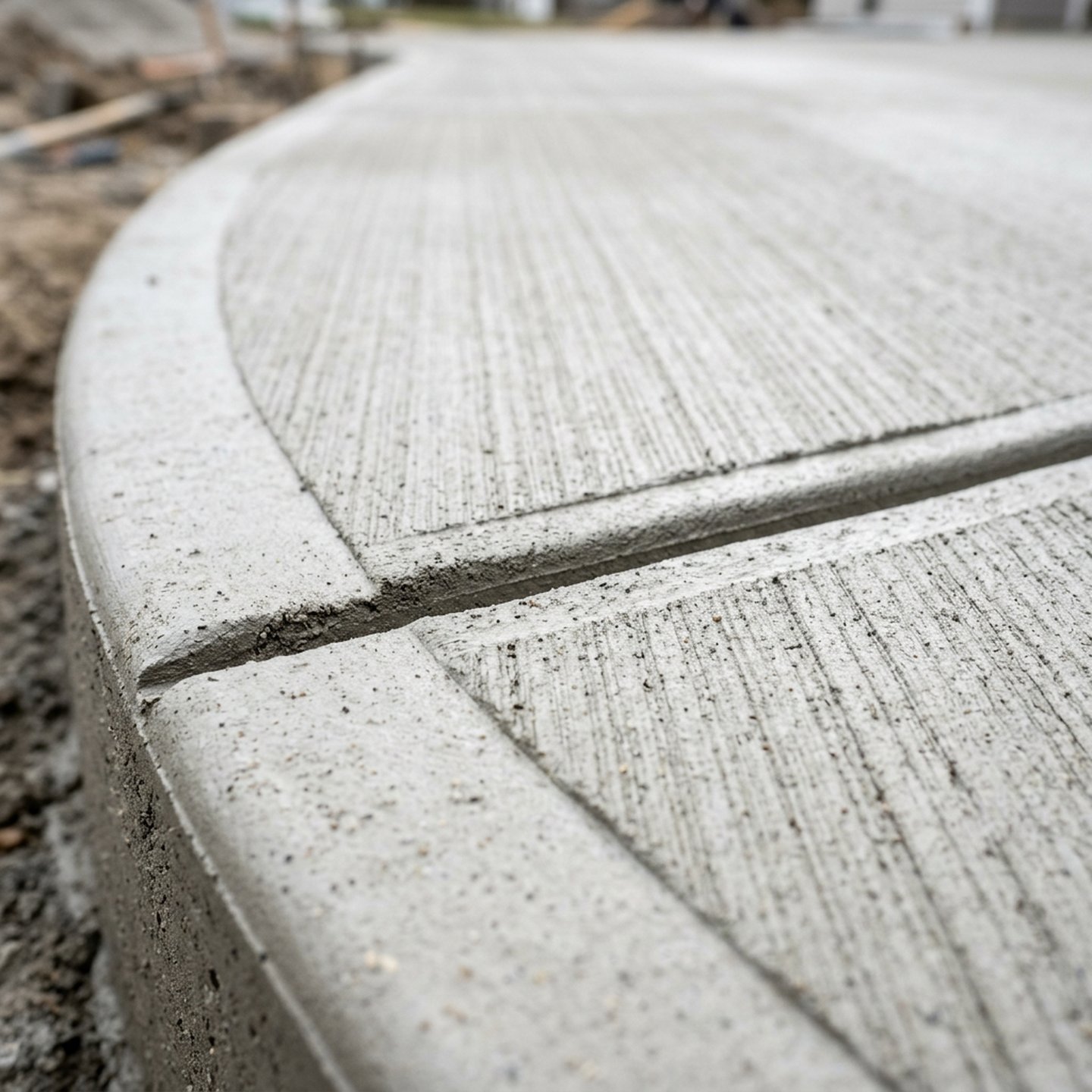
Concrete will crack. Control joints, cut and spaced deliberately, decide whether that happens on a line you chose or across the middle of the slab.
Sawcut & tooled control joints
On top
Water is the surface enemy
Freeze–thaw damage starts with water in the surface. Sealing is the cheapest thing that slows it, and on a sound slab it is the whole fix.
Clean & seal
07 · Straight answers
Repair, answered.
The questions people ask about concrete that has started to fail.
Should I repair, resurface or replace?
It comes down to whether the slab has moved. Surface damage on concrete that still sits flat is a repair or a resurfacing job. A slab that has settled, heaved or cracked through because the ground under it shifted needs replacing — anything laid over a moving base will fail along the same lines.
My driveway has hairline cracks. Is that a problem?
Usually not. All concrete moves and hairlines are how it relieves that. What matters is where they are — cracks that land in the control joints are the joints doing their job. Cracks wandering across the middle of a slab, opening wider each year, are telling you about the ground underneath.
What is spalling?
Surface flaking, where the top layer breaks away and leaves the aggregate showing. It is a surface problem rather than a structural one, and here it is usually freeze–thaw damage: water gets into the surface, freezes, expands and lifts it.
One section has sunk. Can just that be replaced?
Often, yes — isolated panels can be cut out and repoured, which is far smaller than a full tear-out. The question is whether the neighboring panels are still sitting still. If they are rocking too, replacing one buys a season.
Why does concrete fail around here specifically?
Cecil red clay swells wet and shrinks dry, and the Piedmont sees dozens of shallow freeze–thaw cycles each winter rather than one long freeze. That combination works on both the sub-grade and the surface.
Will you tell me if a repair is not worth it?
Yes, and it is the more common answer than people expect in both directions. Sometimes a slab everyone assumed was finished only needs sealing. Sometimes a repair that looks cheap is money spent twice.
08 · Related guides
Keep reading.
09 · Free estimate
Tell us what has gone wrong.
Send a photo and the street. We will come and look, and tell you which of the three jobs it actually is.
(704) 966-9268- Free written estimate
- Fully insured
- Call or text, seven days
Huntersville · Cornelius · Mooresville · Denver · Concord · North Charlotte · Troutman · Statesville