4.7 ★ on GoogleCarolina Custom Concrete
Lake Norman, NC · Insured concrete contractor
Concrete Pool Deck Contractors — New, Resurfaced & Repaired
Textured, slip-resistant pool decks with banded borders and drainage designed in — new pours or resurfacing over a sound slab. Free written estimates.
InsuredFree written estimates
SureCrete systemsWallStamp · WallSpray
(704) 966-9268Call or text
What are we building?
Pick the closest match — we will get the specifics when we walk the job.
We respond in less than 2 hours
01 · The options ladder
Four steps, same slab underneath
A pool deck is flatwork with a harder brief: it is walked on wet, barefoot, in full sun.
Plain concrete is the base. Textured for grip, and it works.
Colored and sealed adds pigment and a protective seal. Around a pool the seal earns its keep because of the chemicals and the constant wetting.
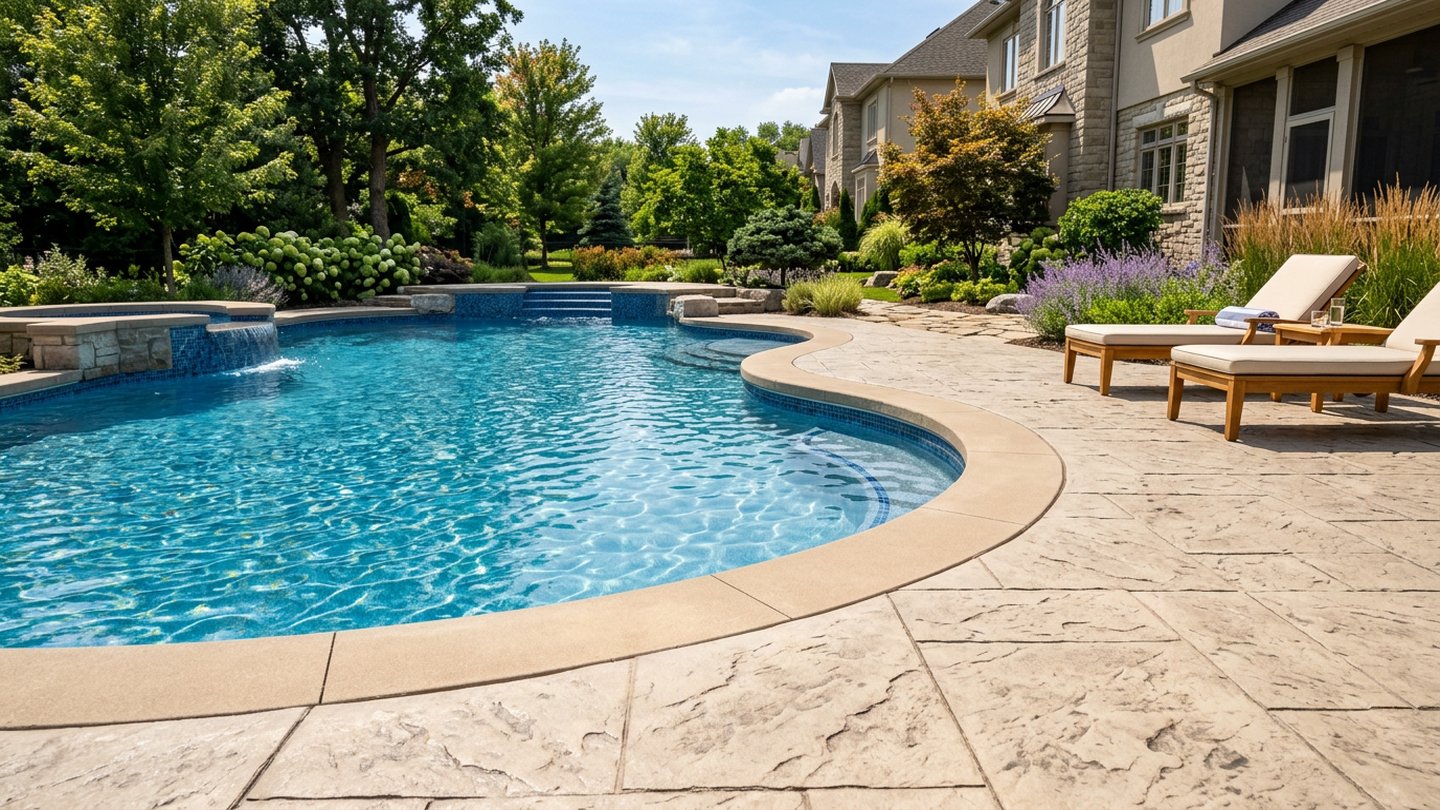
Stamped presses a pattern in — flagstone and paver patterns are the usual choices around water — with a base color and an accent for depth.
Banded borders sit across all of the above: a contrasting edge that frames the field and marks the transition to coping or lawn.
Where a deck runs on into a patio, the same crew pours both — see concrete patio contractors for that side of the job.
02 · Selected work
Pool decks we have poured
Captions say the service and the finish.
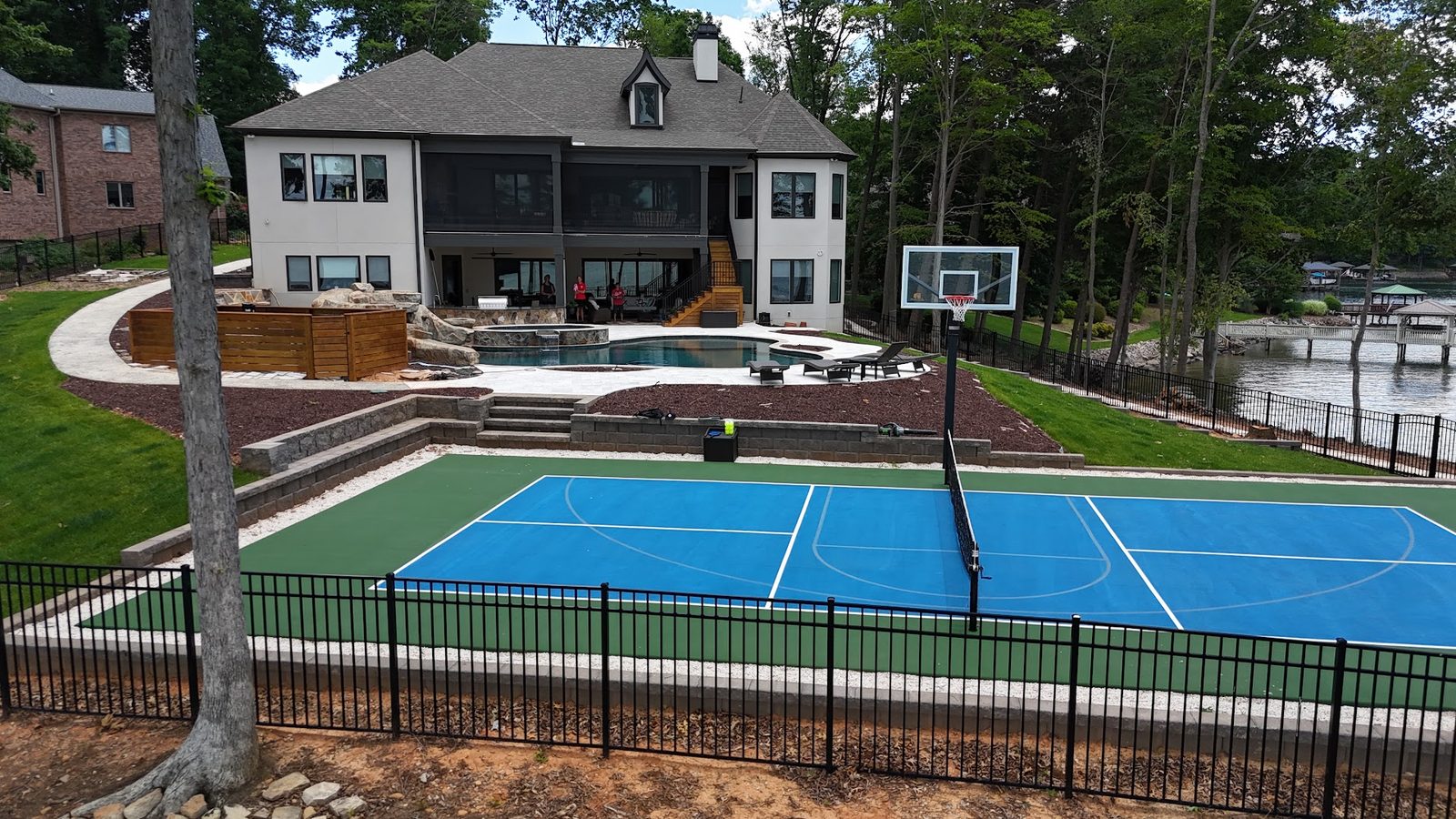
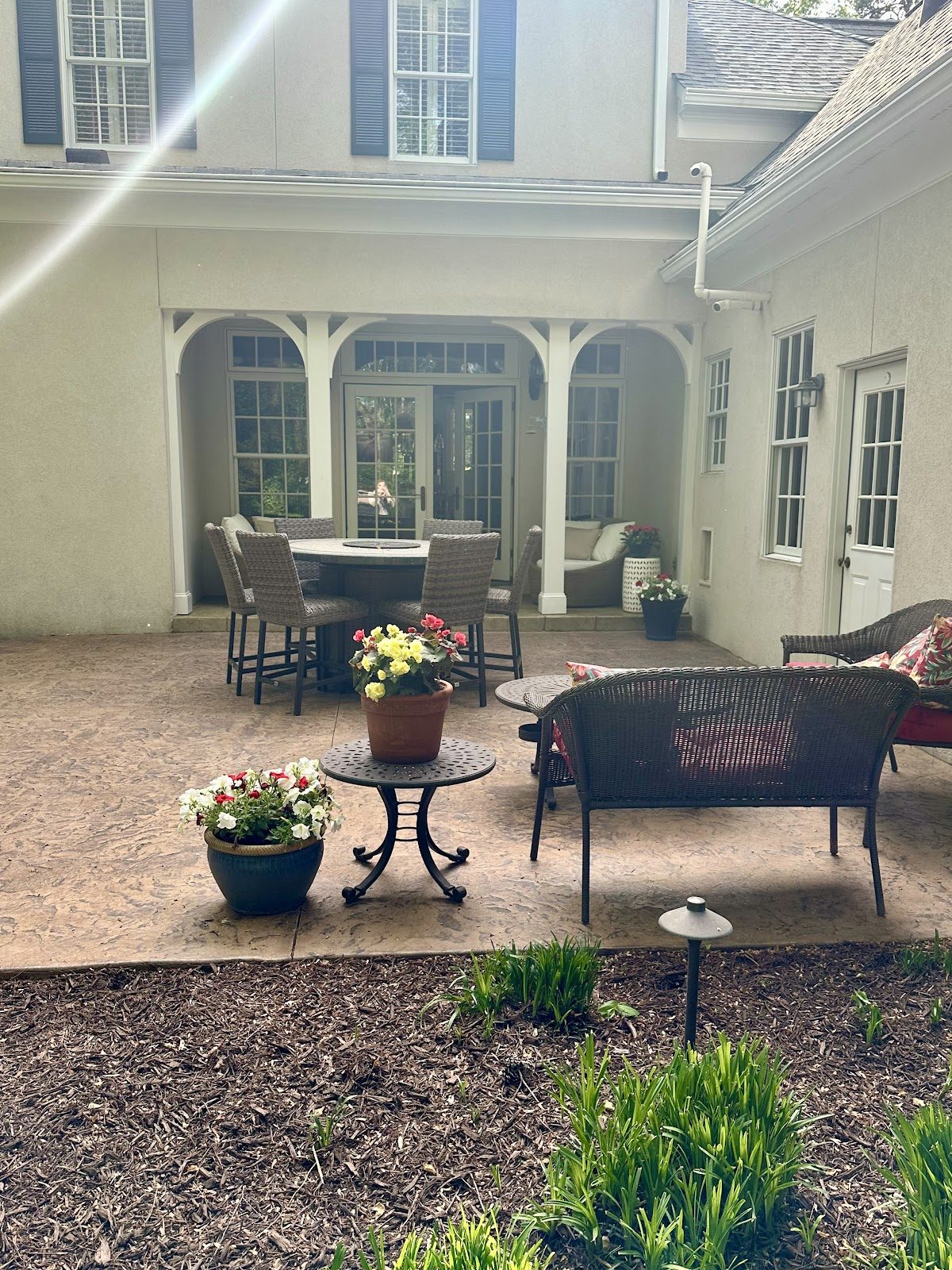
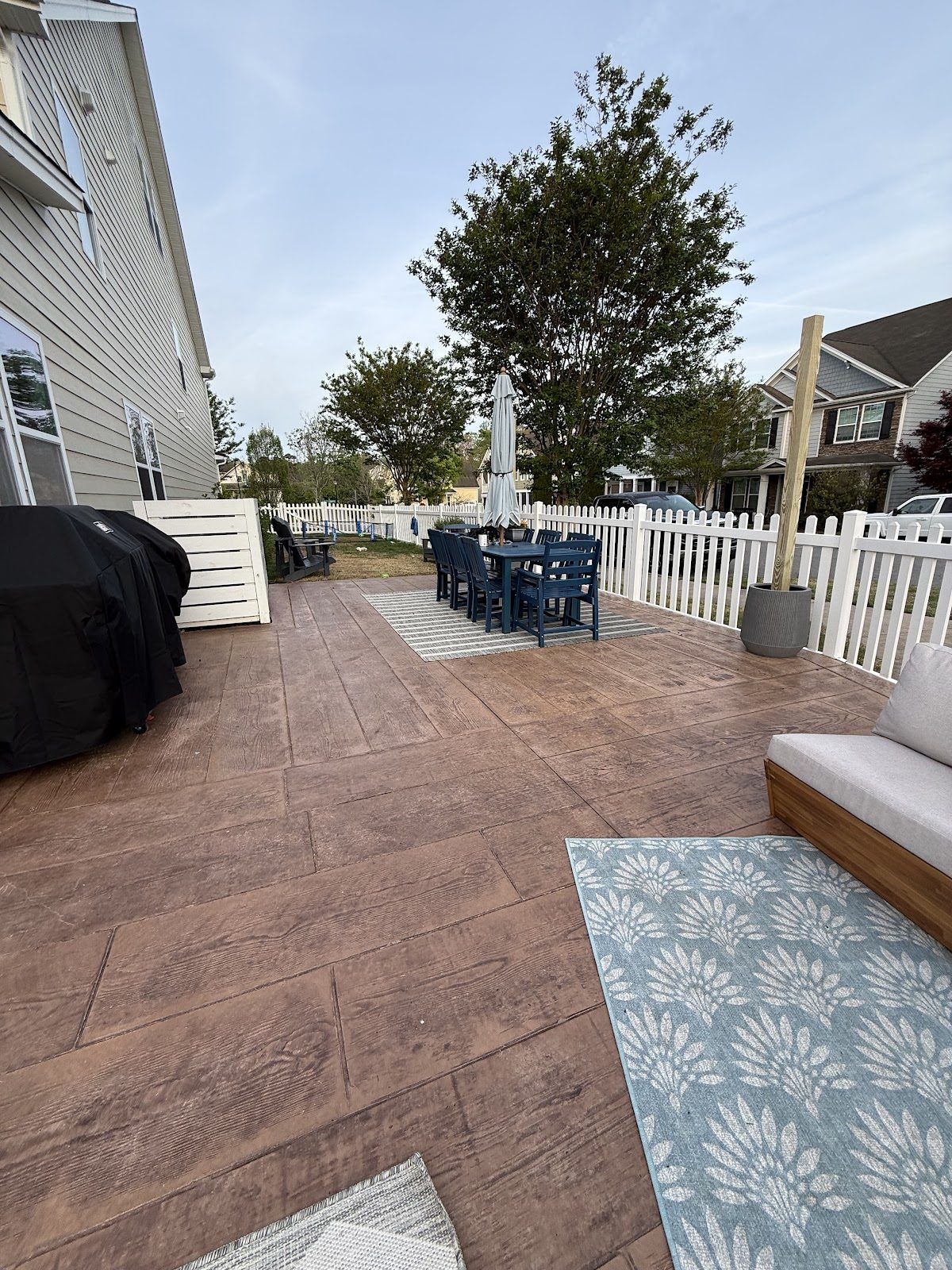
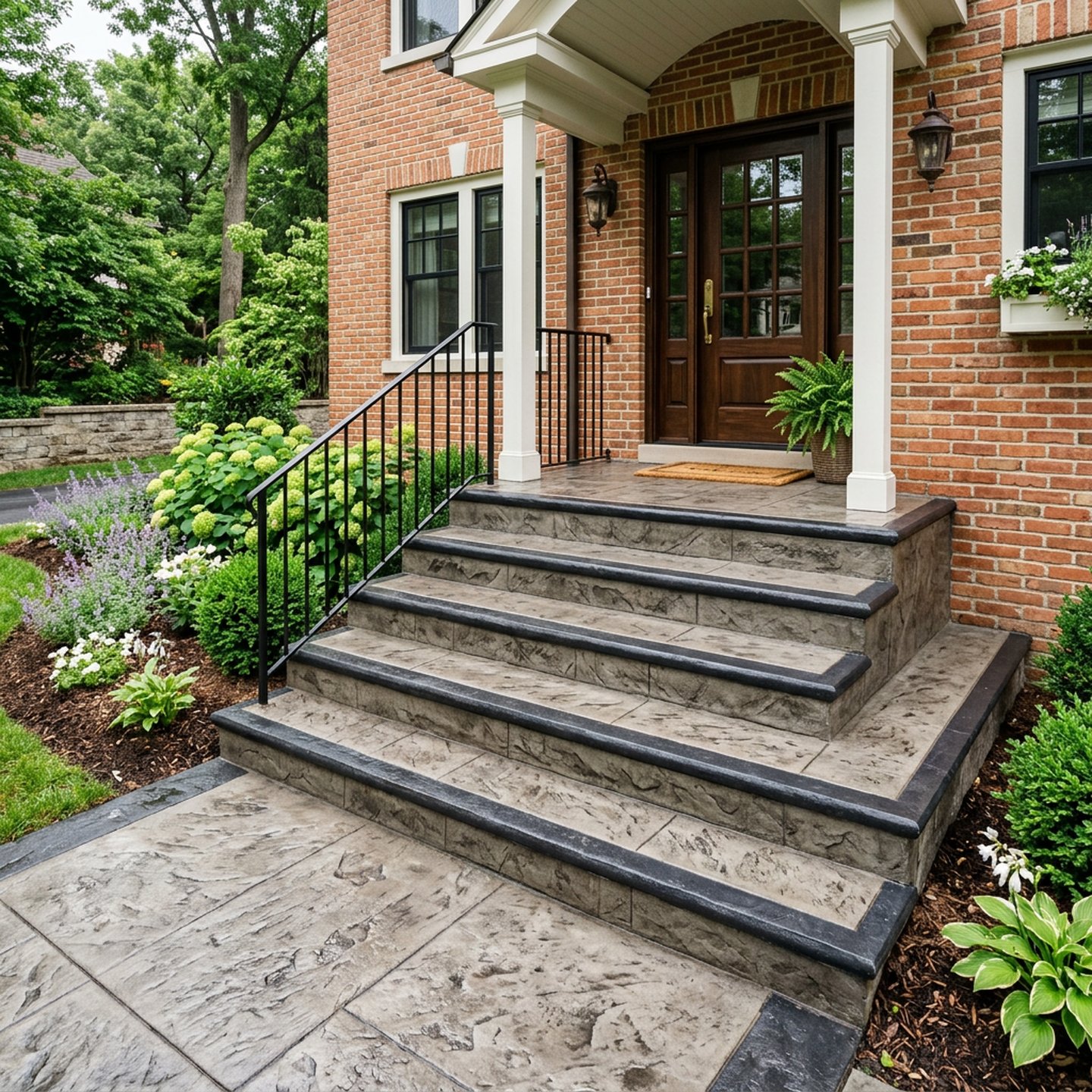
Broom · stamped · stained · sealedDenver · Cornelius · Huntersville · Mooresville
03 · Resurfacing
Working over what is already there
Around a pool, demolition is the expensive and disruptive half. Avoiding it changes the job entirely.
If the existing slab is structurally sound — sitting flat, no settlement, no cracks running through — an overlay bonds a new decorative surface over the top. No breaking out, no machines working next to a pool, no disposal. The deck you have becomes the substrate for the deck you want.
If the slab has moved, an overlay is the wrong answer and will crack again along the same lines within a season or two. That is the honest limit of resurfacing, and it is worth saying plainly because the companies selling proprietary coatings rarely do.
Which of the two you are looking at is decided by walking it, not by photographs.
04 · Pool deck repair
Pool deck repair
Three things go wrong with a concrete pool deck, and each one points at a different fix.
Cracks. A hairline in a control joint is the joint working. A crack running across the field, or one that reopens wider each season, means the ground under that panel has moved — pool decks sit on backfill around the shell, and backfill settles. An isolated panel can be cut out and repoured; a run of them is a base problem.
Lifted coping edges. A lip where the deck meets the coping means the deck panel has dropped or the coping has heaved. That edge is a trip hazard first and a cosmetic problem second, so it gets dealt with before anything decorative is discussed.
Spalling. Flaking at the surface is freeze–thaw and pool chemistry working on the top layer. The slab underneath is often sound, which makes it a candidate for concrete resurfacing rather than repair or replacement.
The decision is the same one we make on any slab: repair where the damage is local and the deck still sits flat, resurface where the surface has failed and the slab has not, replace where the ground has moved and taken the deck with it. Concrete repair covers how we read it. Around Denver NC and the lake's west shore, where lots fall toward the water, the drainage side of that read matters as much as the slab does.
05 · Grip and temperature
The two things nobody publishes honestly
Both are real considerations and both get answered vaguely everywhere else, usually by whoever is selling the alternative material.
Slip resistance is a function of texture, not of material. A textured concrete deck grips; a smooth-trowelled one does not. This is why a pool deck is finished differently from an interior floor even when the concrete is identical.
Surface temperature depends heavily on color — a light field stays cooler than a dark one in the same sun. For an honest cross-material comparison, travertine is commonly cited as running 15–30°F cooler underfoot than concrete. We are quoting that published figure rather than one of our own because we have not measured deck temperatures ourselves, and a number invented to win an argument is worth nothing to you standing on it in July.
06 · Straight answers
Pool decks, answered.
What people ask before resurfacing or pouring around water.
What are the options for a pool deck?
Plain concrete at the base, then colored and sealed, then stamped in a flagstone or paver pattern. Each step adds material and labor, and each one changes how the deck looks far more than how it performs.
Is concrete too hot underfoot around a pool?
Surface temperature depends heavily on color and finish — lighter fields stay cooler than dark ones. For context, travertine is commonly cited as running 15–30°F cooler underfoot than concrete, which is the honest comparison to know when you are weighing materials. We would rather give you the published figure than a number we measured on nobody's deck.
Will it be slippery when wet?
That is what texture is for. A pool deck is finished for grip rather than for smoothness, which is the opposite of what you would choose for an interior floor.
Can you resurface my existing pool deck?
Often, yes. If the slab is structurally sound, an overlay bonds a new surface over the top — no tear-out, no demolition around a pool, which is the expensive and disruptive part. If the slab has settled or cracked through, an overlay will crack again along the same lines.
Does a pool deck need sealing?
Sealing protects the color and makes the surface easier to keep clean, which matters more around a pool than anywhere else because of the chemicals and the constant wetting.
How is drainage handled?
Fall is designed so water leaves the coping rather than standing against it. On lots that slope toward the lake, where the water goes is decided before where the concrete goes.
07 · Related guides
Keep reading.
08 · Free estimate
Tell us about your pool deck.
New pour or resurfacing over what is there — we will look at the slab and tell you which one it can take.
(704) 966-9268- Free written estimate
- Fully insured
- Call or text, seven days
Huntersville · Cornelius · Mooresville · Denver · Concord · North Charlotte · Troutman · Statesville