
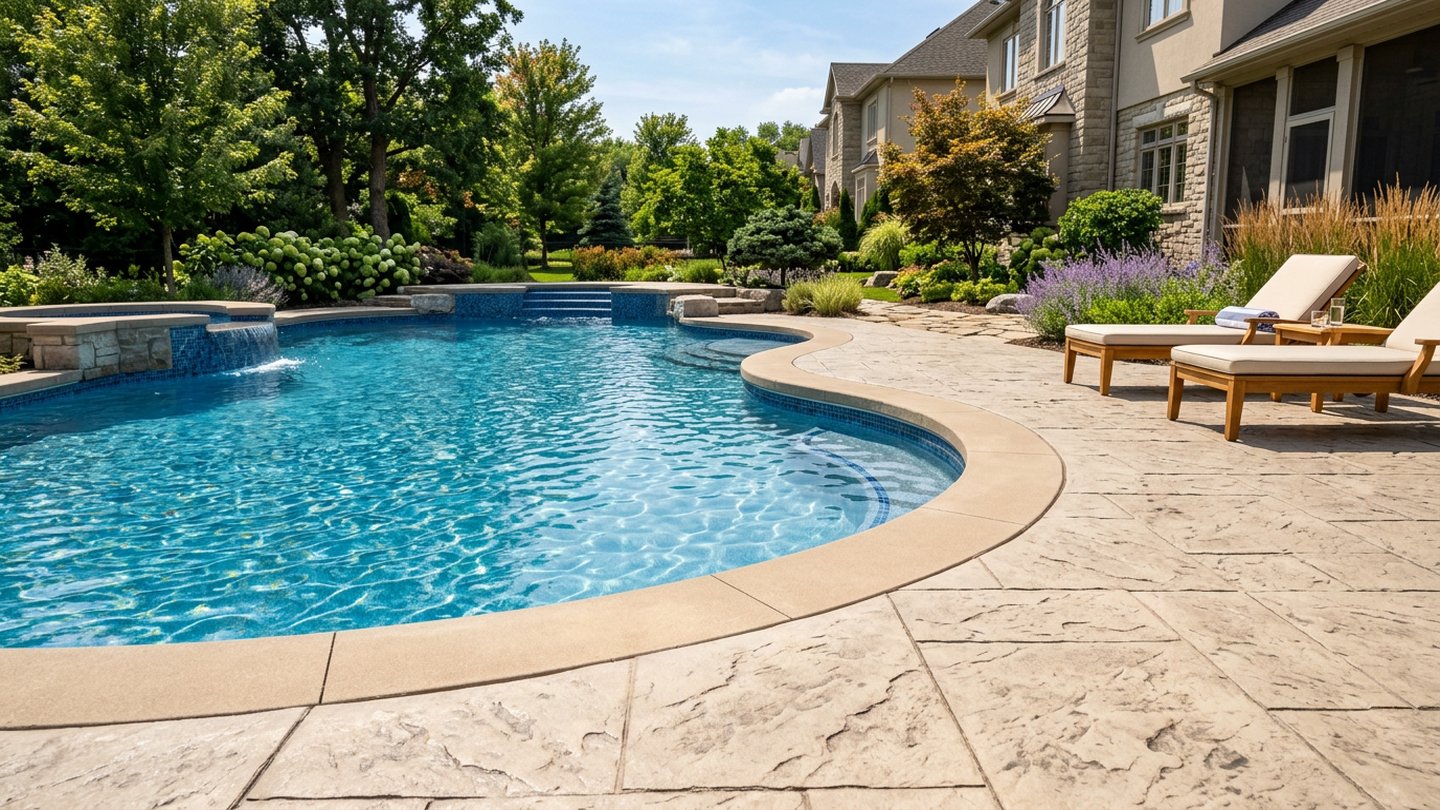
How to tell if a pool deck needs resurfacing or replacing
This post is about a deck you already have. If you are choosing a surround from scratch, our pool deck options post covers that instead.
Cornelius has a lot of pools, many of them now old enough that the surround is the part showing its age rather than the pool. That is good news more often than people expect, because the two problems a surround can have are completely different in cost.
Surface problems — staining, dullness, light spalling, a texture that has gone slippery, a color that has gone flat, or simply a finish nobody likes any more — sit on top of a slab that is still doing its job. These are resurfacing problems.
Structural problems — sections at different heights, a deck that rocks underfoot, cracks that reopen wider each year after being filled — mean the ground underneath has moved. No surface treatment addresses that.
You can usually tell which one you have by walking it and looking, and the decision rules in our repair, resurface or replace guide apply to a pool deck exactly as they do to a driveway.
Four options for an existing pool deck, cheapest first
Assuming the slab is sound, these are your choices — and the first one is more often adequate than people think.
| Route | Fixes | Does not fix |
|---|---|---|
| Clean and seal | Staining, flatness of color, ongoing protection | Texture, pattern, heat, anything structural |
| Repair and seal | Local damage plus the above | Overall appearance — patches will show |
| Overlay / resurface | Appearance, texture, grip and heat, across the whole deck | Anything happening under the slab |
| Replace | Everything, including the sub-grade | Nothing — but it is the most expensive and most disruptive route |
Why an overlay suits a pool deck: grip and heat can be re-chosen
Resurfacing is useful anywhere. Around a pool it is unusually valuable, for two reasons that have nothing to do with looks.
Grip can be re-chosen. A surround that has become slippery — worn smooth, or finished too smooth in the first place — is a genuine safety problem, and an overlay lets the texture be selected deliberately rather than inherited.
Heat can be reduced. Lighter, more reflective surfaces absorb less heat than dark dense ones. If your deck is unpleasant underfoot in July, changing its color is a real intervention, and it does not require removing anything.
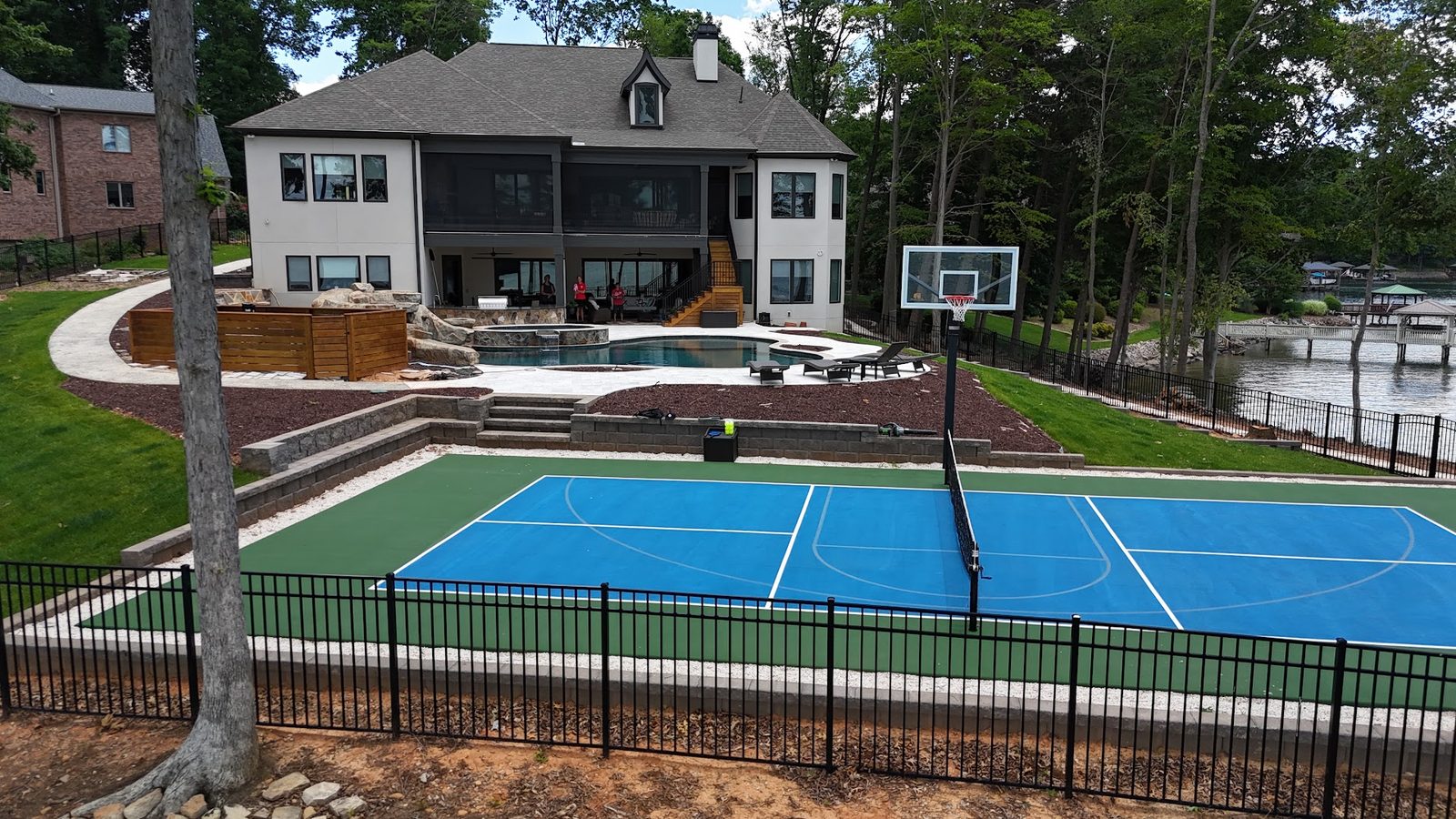
Both of those are available in the same job that fixes how it looks, which is why resurfacing a pool deck often delivers more than resurfacing a driveway does. See resurfacing and overlays for how the work is done, and pool decks for what we build.
When replacing a pool deck is the honest answer
We would rather say this plainly than resurface something that is going to fail.
- The slab has moved. Settlement, rocking, or cracks that keep reopening. An overlay laid over movement fails along the same lines, usually within a season, and then you have paid twice.
- Damage is across most of the deck. At some point repairing everything costs more than starting again and still leaves you with an old surround.
- The layout is wrong. If the surround is the wrong size or shape, or if drainage was never right, resurfacing puts a new finish on a design problem. That is the one case where a tear-out genuinely buys you something a finish cannot.
What we do in town is on the Cornelius page.
When to resurface a pool deck: timing it around the season
A pool surround is one of the few concrete jobs where when you do it genuinely matters.
Resurfacing takes the deck out of use while it is done and cured, and doing that in July costs you the thing you own a pool for. The Piedmont pour and overlay season runs roughly March to November, which leaves the shoulders — early spring and autumn — as the sensible windows.
Autumn has a particular advantage: the deck is finished, cured and settled before the following summer, and you are not counting days against a booked holiday. Spring works too, but it competes with everybody else who thought about it in April.
Resurfacing questions.
Mostly about what an overlay can and cannot do.