What Huntersville clay actually does to concrete
Getting this distinction right is what makes the rest of the decision sensible.
Cecil soil is North Carolina's state soil and it is what most of Huntersville sits on. It shrinks as it dries and swells as it takes water, seasonally, and that movement goes into whatever is on top of it. This is a structural mechanism: it moves slabs, and no finish prevents it. The answer to it is base preparation — compaction, adequate depth, and getting water away from under the slab.
Separately, the Piedmont gets repeated shallow freeze–thaw cycling rather than one deep winter freeze. Water enters the surface, freezes, expands, thaws, repeats. This is a surface mechanism, and it is the one where finish and sealing genuinely matter, because it works on the top few millimetres.
So: base decides whether your slab stays flat. Finish decides how the surface holds up, how it grips, and how it looks after ten years of red clay washing across it.
Broom, exposed aggregate, stamped or stained: four finishes compared
None of these is wrong. They are good at different things.
| Finish | Strengths here | Trade-off |
|---|---|---|
| Broom | Excellent grip, hard-wearing, easy to clean, cheapest | Plain gray shows iron-oxide staining more than anything else |
| Exposed aggregate | Outstanding grip; hides staining and wear well | Textured — harder to sweep, less comfortable underfoot |
| Stamped | Pattern and color disguise staining; strong visual result | Wants resealing; grip depends on the texture chosen |
| Stained / integral color | Disguises clay staining; tonal and variegated | Applied color is a surface layer; integral color runs through the mix |
Why color and texture hide red-clay staining
This is the local argument for decorative work, and it is not really an aesthetic one.
Red clay is high in iron oxide. That is what gives the soil its color, and it is what produces the rust-toned discoloration that appears on concrete near beds, downpipes and wherever runoff crosses a slab. On plain gray concrete it is highly visible. On a variegated, colored or textured surface it is substantially less so.
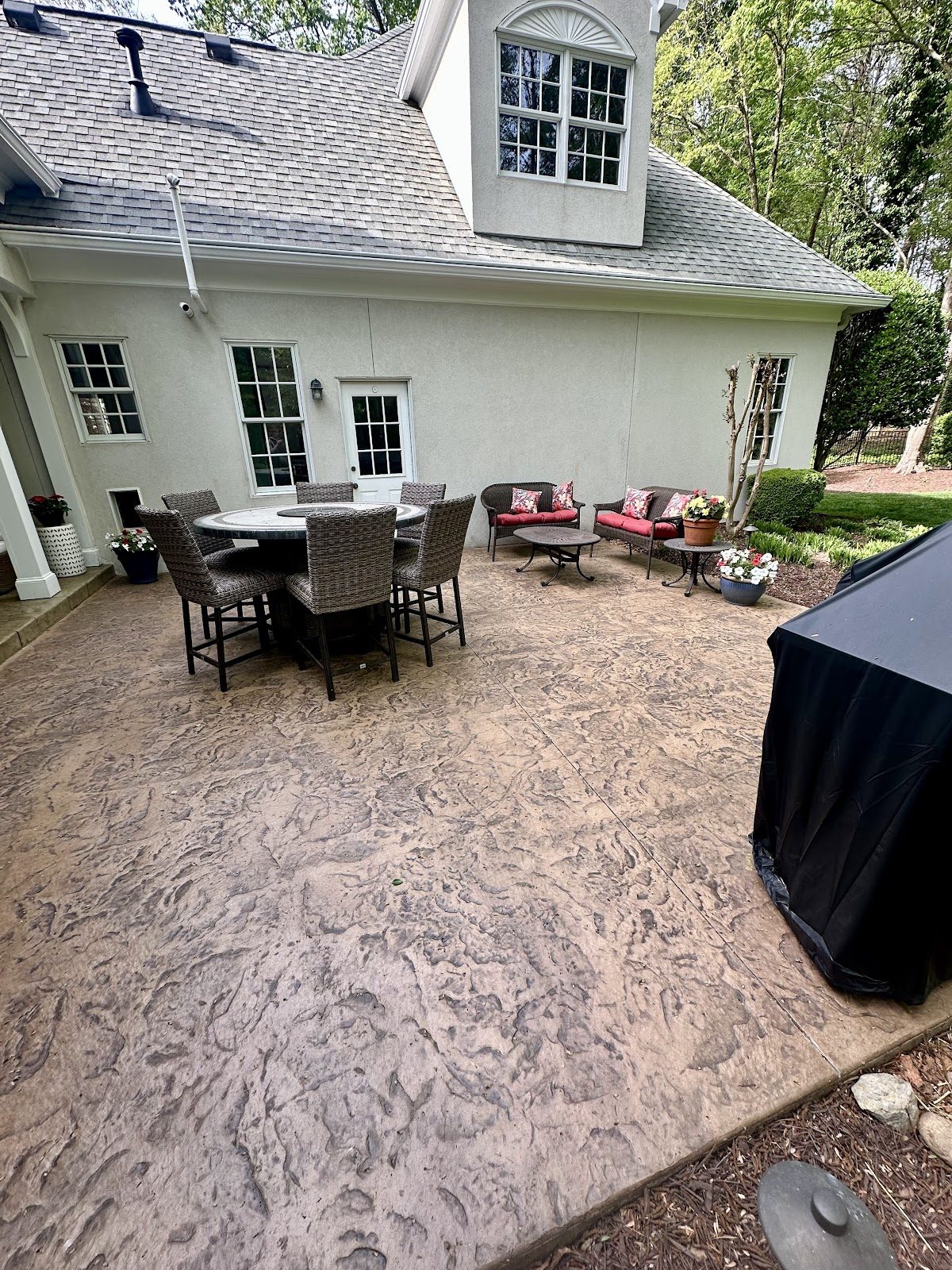
That is a maintenance argument as much as a looks one. A broom-finished gray driveway in Huntersville will need cleaning to look its best in a way that a warm-toned stamped surface will not, simply because the staining is working against a smaller color contrast.
Either way, sealing is the intervention that does most of the work, because it addresses absorption and freeze-thaw at the same time.
How to choose a finish: match it to the surface's job
Once the base question is settled, this is a straightforward decision.
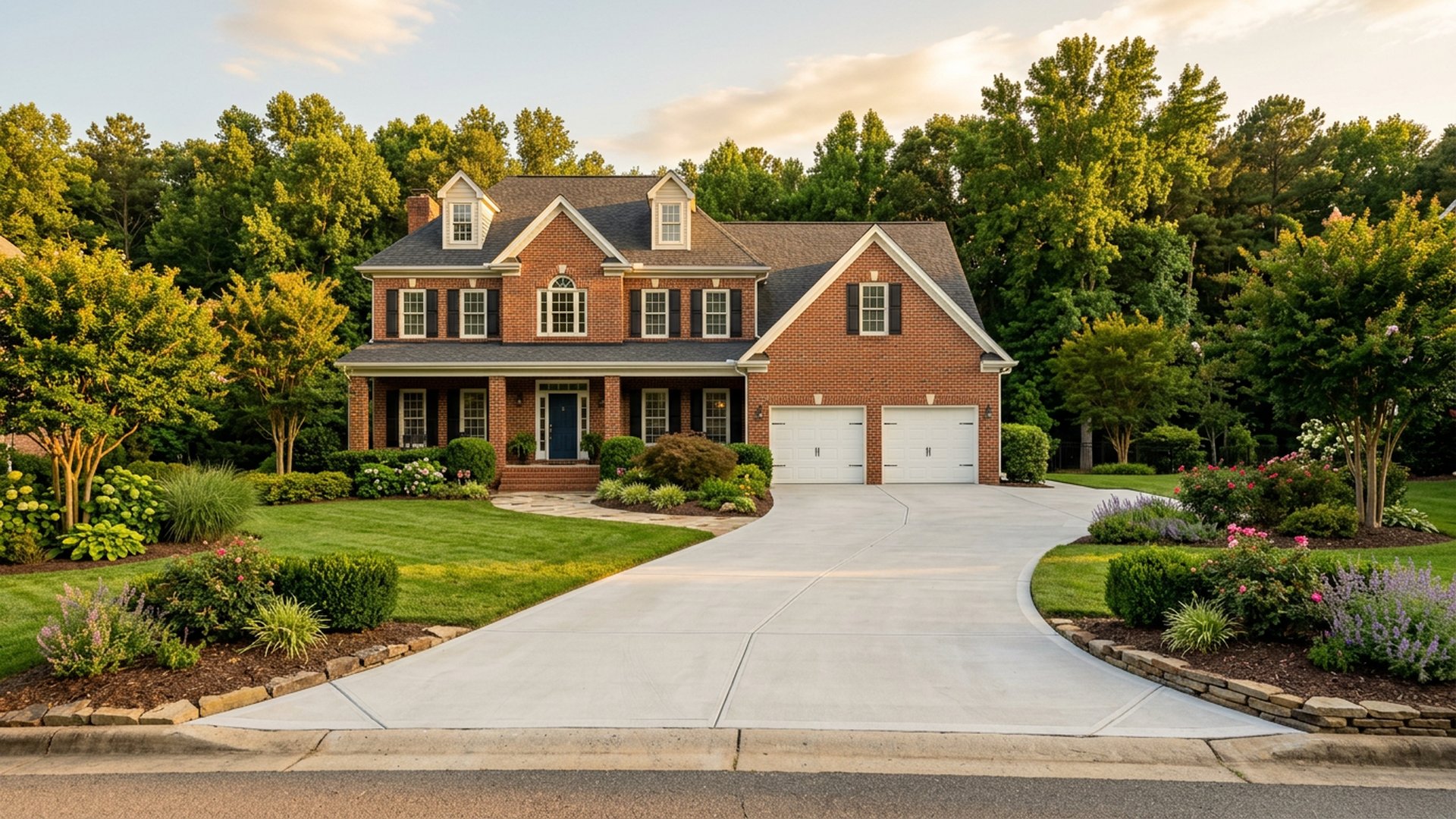
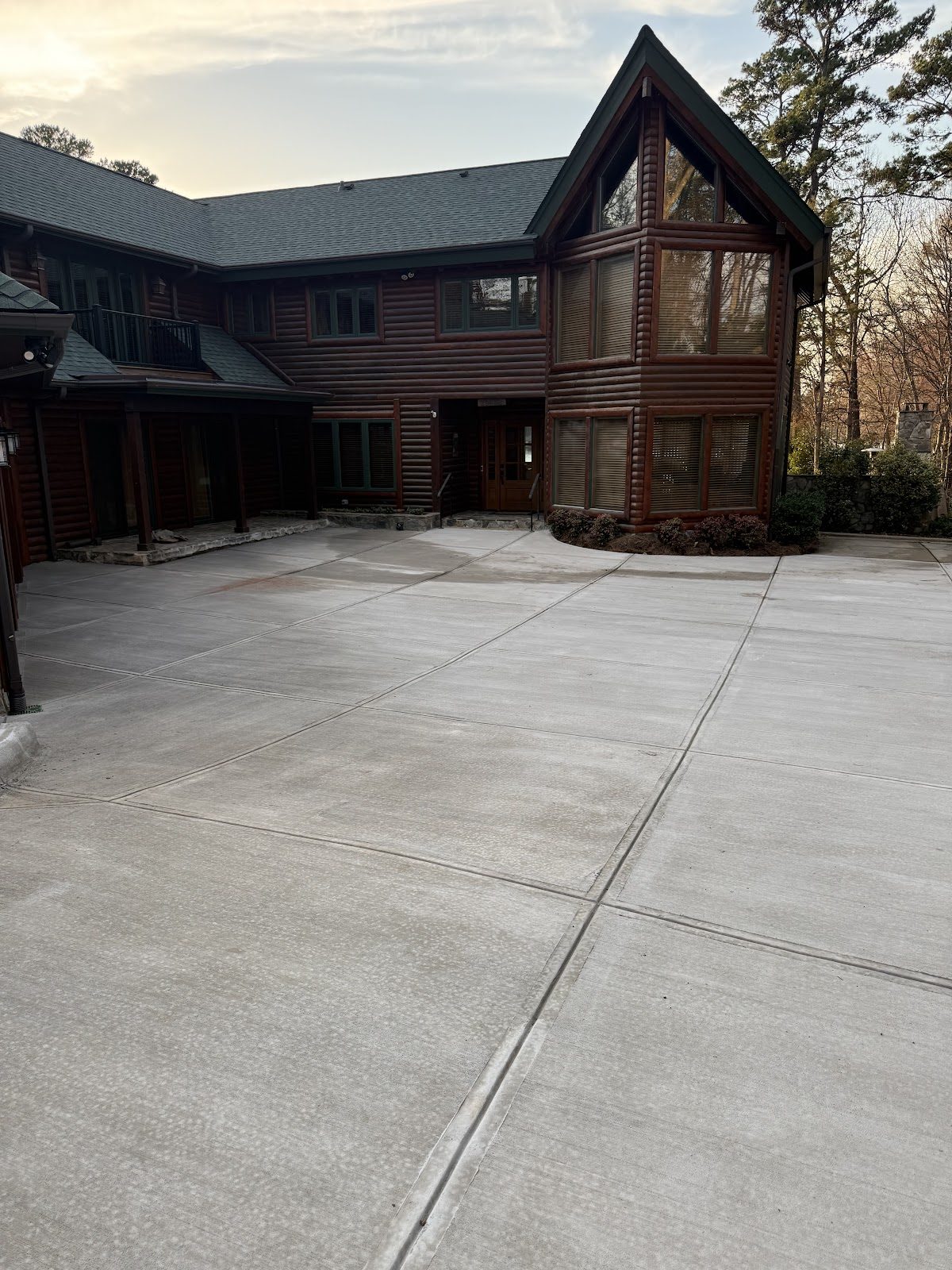
Driveways want grip, hard wear and low fuss. Broom is the default for good reason. Where appearance matters at the entrance, stamped borders or a stamped surface earn their cost.
Patios are where decorative finishes pay off, because you look at them, sit on them, and they are not carrying vehicles. See concrete patios.
Pool decks have the strictest requirement, and it is not visual: grip when wet, and a surface that is comfortable on bare feet. Lighter, more reflective surfaces absorb less heat than dark dense ones, which is a real consideration on a south-facing surround.
Walkways and steps want grip above everything, because they are where people fall.
What we do locally is on the Huntersville page.
What to ask about the base, since it matters more than the finish
The finish is the part you can see in a photograph. The base is the part that decides whether you are having this conversation again in eight years, and it is invisible the moment the work is finished — so the only chance to assess it is in the quote.
- Ask what happens to the existing sub-gradeOn a replacement, the honest answer involves opening it up and re-grading rather than leveling with the pour. A quote that describes only what goes on top is describing half a job.
- Ask how water is being dealt withClay moves with moisture, so where water goes is a structural question here, not a landscaping one. If water currently crosses the area, adding a hard surface redirects it somewhere — and the somewhere should be a decision rather than a surprise.
- Ask where the joints will goConcrete cracks; control joints decide where. On a decorative surface they have to be planned against the pattern rather than cut wherever is convenient, and whether somebody has thought about it shows for as long as the slab exists.
None of these are trick questions and any competent contractor will have answers. The point is that all three are about what is underneath, which is exactly where the money that decides longevity gets spent or saved.
Finish questions.
What people ask once the base conversation is done.