
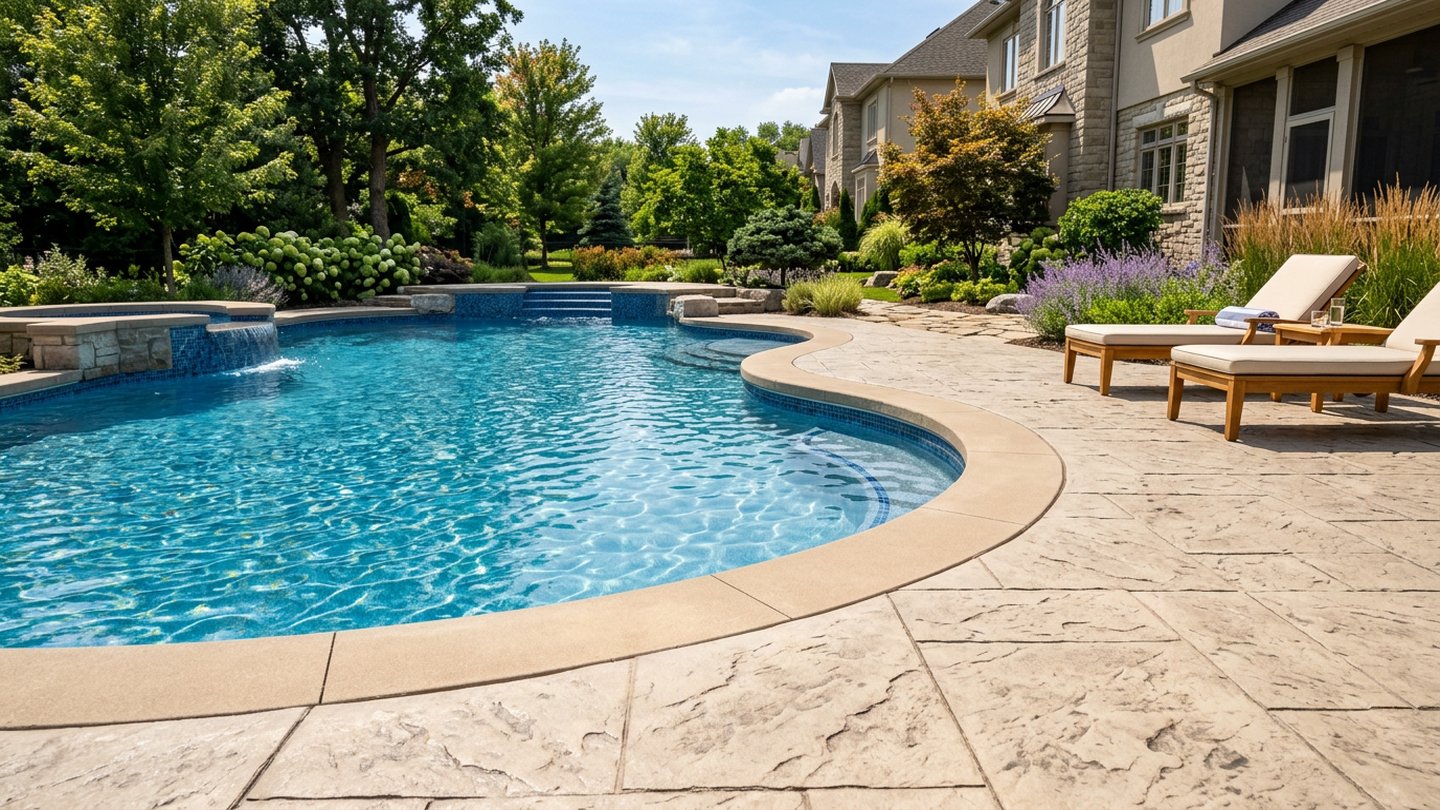
Grip, heat and drainage: the three pool deck constraints
A pool deck is the one concrete surface on a property where appearance is genuinely the third priority.
- Grip when wet. This surface gets walked on barefoot, wet, by people who are not concentrating and are sometimes running. Texture that would be excessive on a patio is the baseline here, and it is not a decorative decision.
- Heat underfoot. Bare feet on a sun-exposed surround in July is the test any pool deck actually has to pass. Lighter, more reflective surfaces absorb less heat than dark dense ones — that is how color and radiant heat work, and it holds regardless of product. We are not going to give you a degree figure, because that depends on the specific finish and orientation and we have no source for one. The usable guidance is to go lighter than instinct suggests, particularly on anything facing south or west.
- Where the water goes. A surround sheds water constantly, and on a west-shore lot that is usually sloping, it has to leave deliberately rather than finding its own route toward the house or the bank. Drainage is settled before the finish is chosen.
Pool deck options compared: plain, colored, stamped, overlay
Each of these is the right answer for somebody. None is the right answer for everybody.
| Option | Strengths | Trade-off |
|---|---|---|
| Broom-finished plain | Best grip per dollar; simple; easy to repair | Plain gray shows clay staining; least visually interesting |
| Colored and sealed | Lighter tones run cooler; color disguises staining | Sealing has to be specified with grip in mind, not after |
| Stamped and textured | Pattern plus a texture chosen deliberately for wet grip | Wants resealing; a heavy pattern can be harsh on bare feet |
| Resurfaced (overlay) | New surface without removing a sound slab; finish chosen for grip and heat | Only works over structurally sound concrete |
Why a Denver pool deck is not a Huntersville one
The physical situation around a Denver pool is usually different in three specific ways, and each one pushes the decision.
- Lots are bigger, so surrounds are bigger. More area means the running cost of a finish that needs regular resealing matters more, and it means the heat question applies across a larger surface with less shade from the house.
- Ground falls toward the water. A surround on a slope is a drainage design before it is a surface, and the fall has to be worked out with the pool and the surrounding grade rather than imposed on them.
- Sun exposure is often unobstructed. Open lake-side lots do not have the neighboring houses and mature planting that shade an in-town surround for part of the day. That makes the color decision more consequential here than it would be a few miles east.
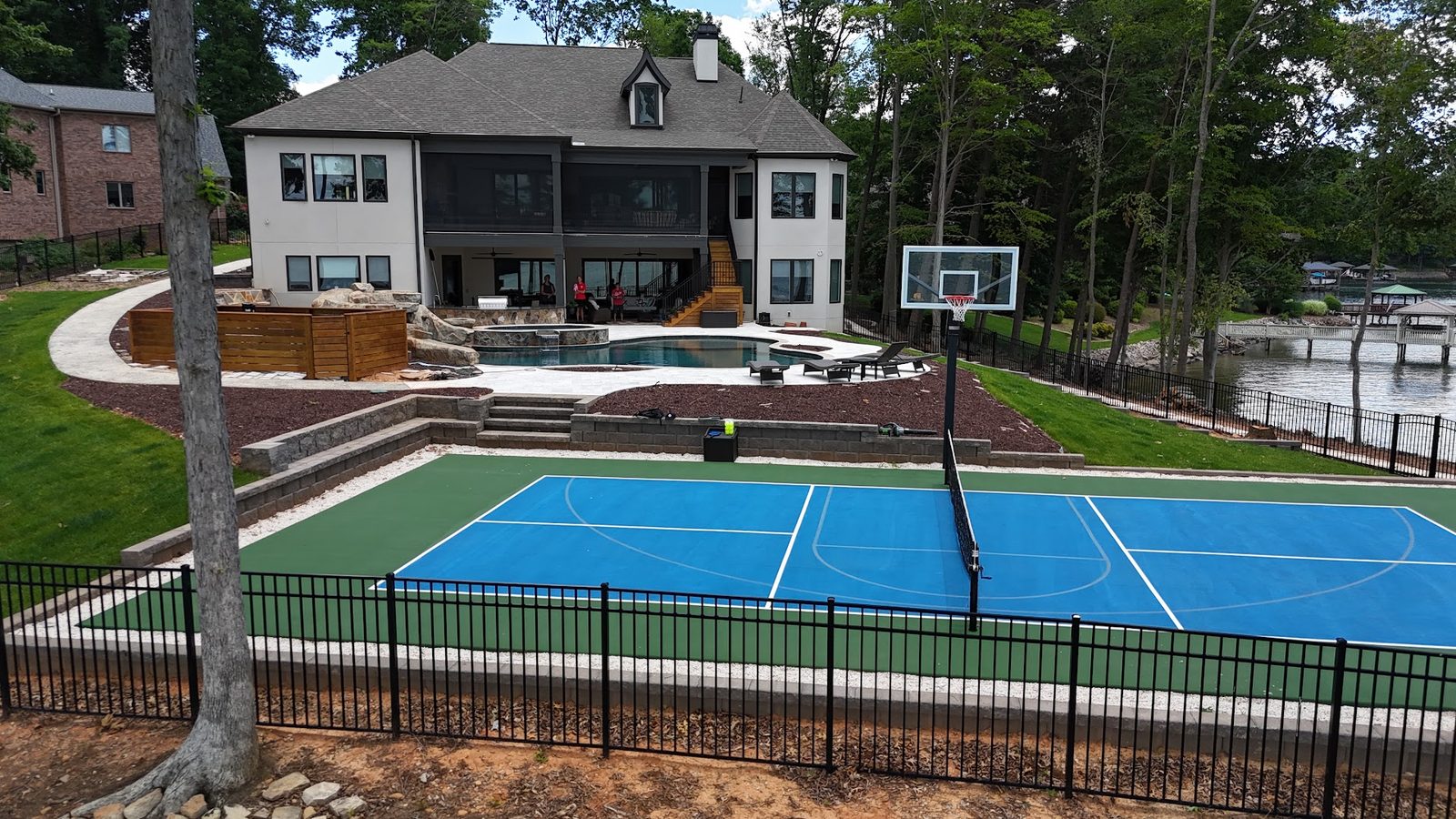
What we build is on the pool decks page, and what we do locally on the Denver page.
Resurfacing an existing pool deck instead of replacing it
Most calls we get about a Denver pool surround are about an existing one rather than a new build.
Start with the same question that governs every concrete decision: has the slab moved, or does it just look bad? A surround that is structurally sound but tired, stained, slippery or simply too hot is a resurfacing conversation, and that is good news — an overlay lets the finish be re-chosen for grip and for heat without removing anything.
A surround that has settled, that rocks underfoot, or that has cracks reopening wider each year is a different conversation, because an overlay inherits whatever the slab underneath is doing. Our repair, resurface or replace guide lays out the decision rules; they apply to a pool deck exactly as they do to a driveway.
Either way, cleaning and sealing is worth more around a pool than anywhere else, because of the chemistry and the constant wetting.
Pool deck questions.
Grip, heat and upkeep, mostly.