
Why decorative concrete is a different HOA submittal
This post is specifically about color and pattern. The general architectural submittal process — what documents, how the calendar works, how approval differs from a permit — is covered in our Huntersville HOA post, and it applies here too.
A like-for-like gray driveway replacement puts back what was already there. There is very little for a board to weigh, because nothing about how the property reads from the street is changing.
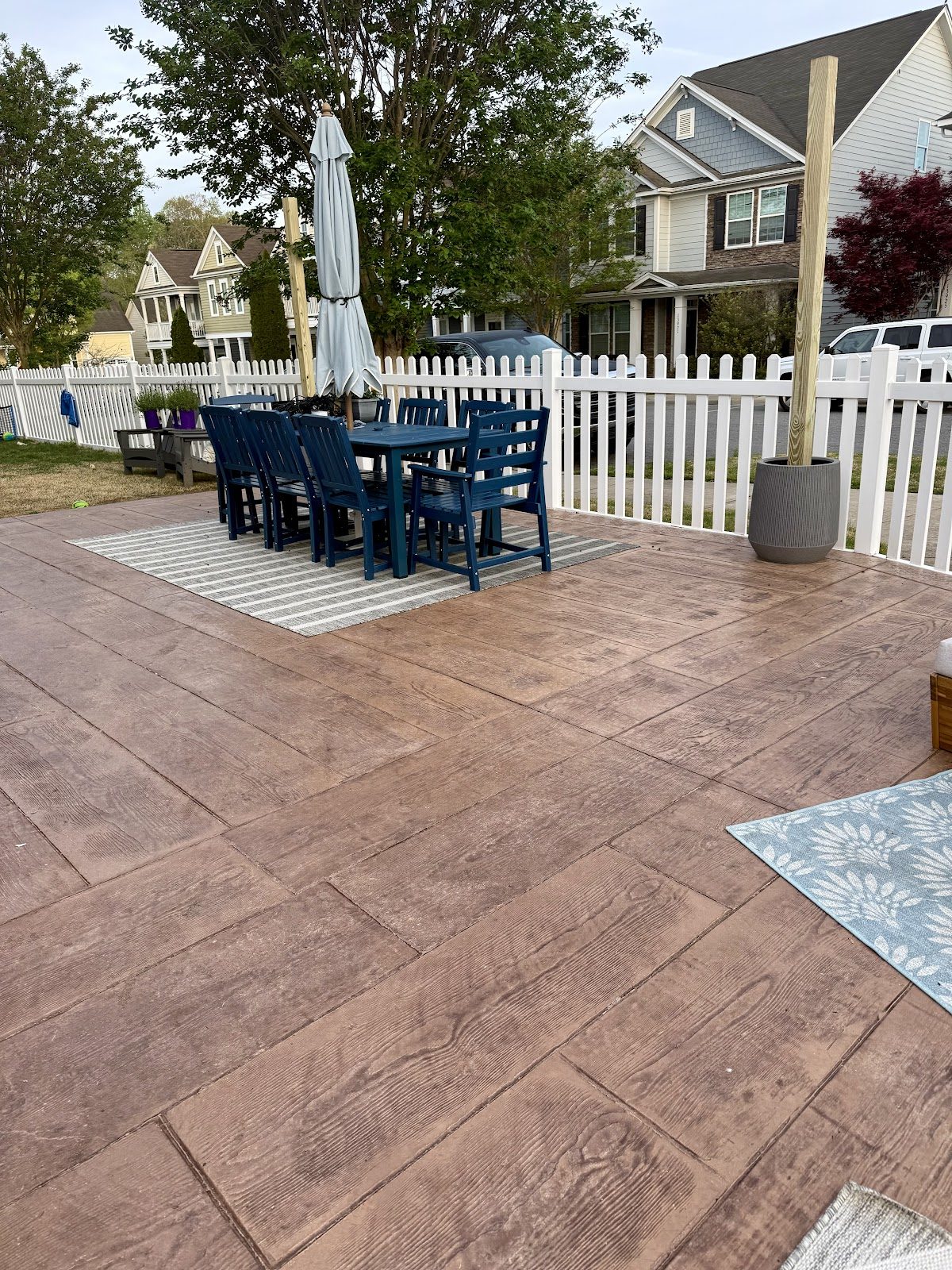
Decorative concrete does change it. A stamped, colored surface at an entrance or across a visible patio alters the palette and the texture of the property, and in communities with an established look — which describes a good deal of covenanted Cornelius, Antiquity among the better-known — that is exactly the kind of change an architectural committee is constituted to consider.
We are not going to tell you what any particular association requires. Covenants differ, we have not read yours, and a confident claim about a named community's rules would be worth nothing to you. What follows is how to make a decorative submittal that does not stall.
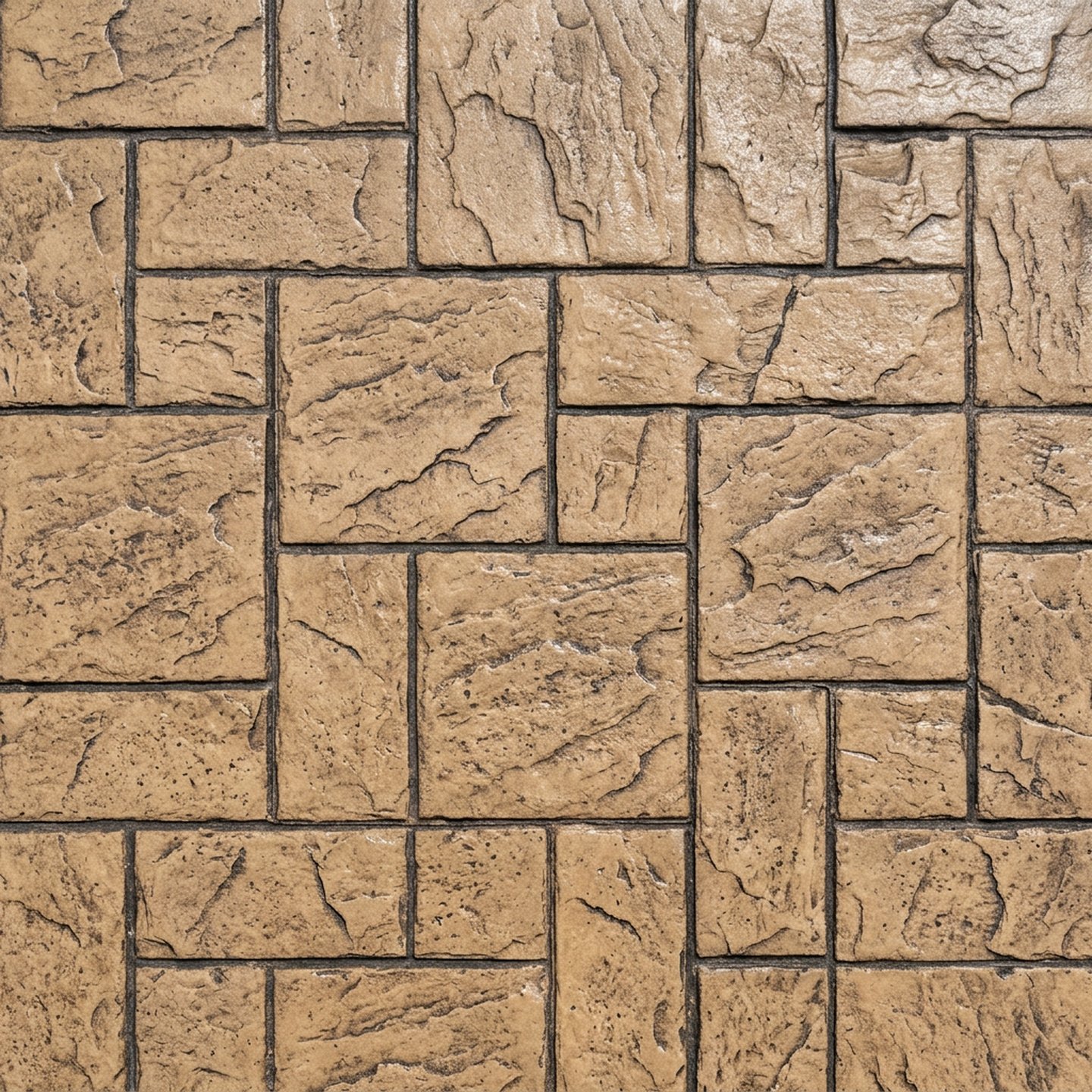
Submit the specific pattern and color, not the category
Almost every decorative approval that goes wrong goes wrong here.
| Vague | Specific |
|---|---|
| “Stamped concrete patio” | “Ashlar slate pattern, this base color, this release color” |
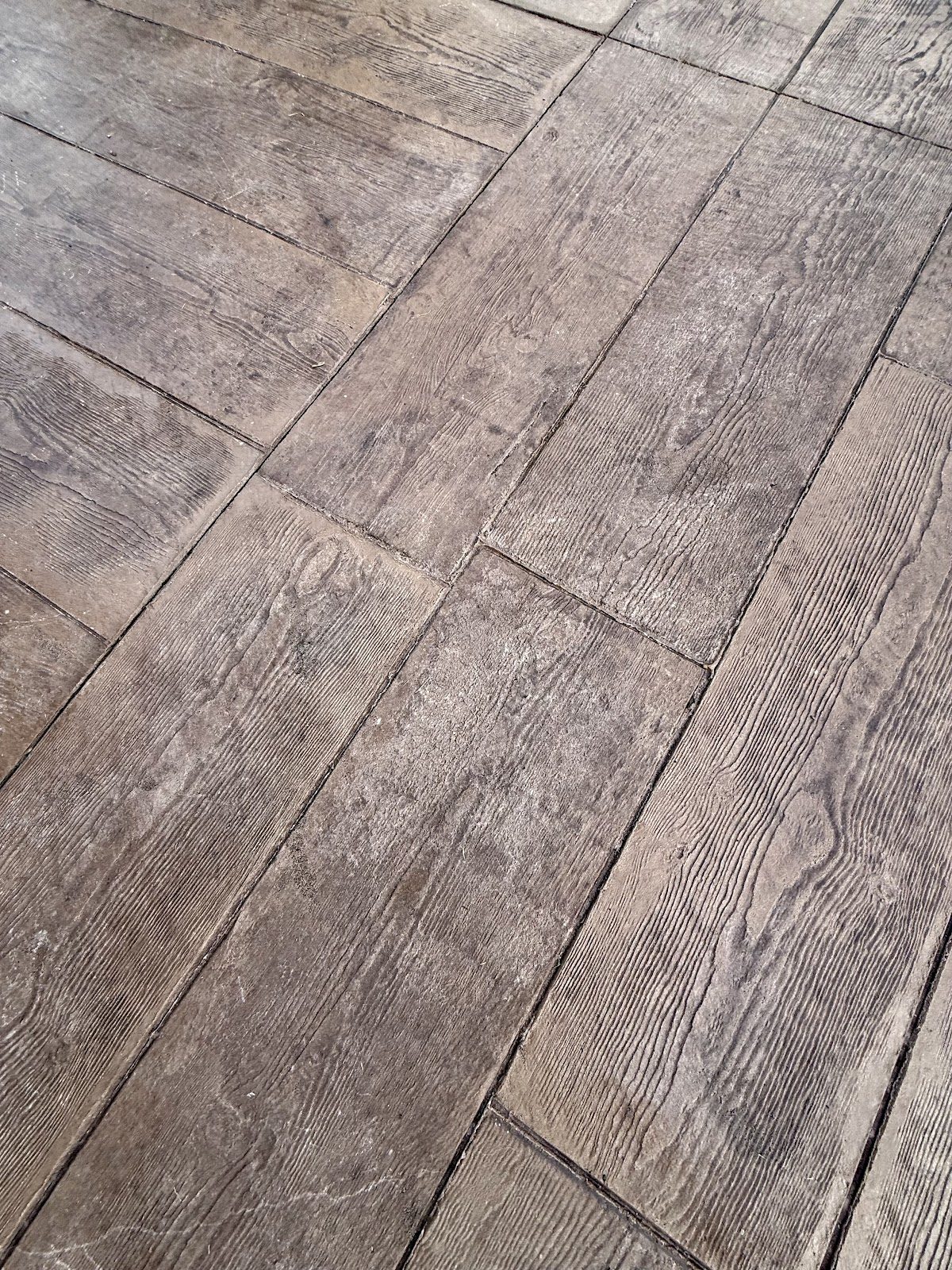
| “Decorative driveway border” | “Running bond brick border, 18″, on a broom-finished field” |
| “Colored concrete” | “Integral color, named product and shade, sample attached” |
| “Similar to the neighbors” | “Photograph of a completed installation in the same product” |
The left column invites a conditional approval, a follow-up question, and another month of committee calendar. The right column can be approved or rejected on the spot, and either answer is more useful to you than a delay.
It also protects you afterwards. An approval that names the pattern and the color is an approval of what you actually built. One that says "stamped concrete" is an approval of a category, and categories are arguable.
What HOA boards weigh on decorative concrete
Understanding what a committee is actually assessing makes the submittal easier to write.
- Does it relate to the house?Decorative concrete that picks up the tone of the brick, stone or roof reads as belonging. One chosen purely from a catalog often does not, and that is usually the unspoken objection.
- How visible is it?A rear patio screened from the street is a different proposition from a stamped driveway and entrance. Expect more scrutiny the more public the surface.
- Is it reversible?Concrete is not, particularly. That is precisely why boards look harder at it than at, say, a paint color, and it is worth acknowledging rather than resenting.
- Does it set a precedent?Committees think about the next twenty applications as well as yours. A submittal that is clearly a considered, specific choice is easier to approve than one that reads as an open door.
Settle the finish first, then submit, then schedule
The ordinary sequence — decide to build, then choose the finish — is backwards in a covenanted community.
Because the finish is the part most likely to be questioned, it is the part that should be settled first, submitted specifically, and approved before scheduling. Choosing the pattern late means either a rushed submittal or a held date.
What that looks like in practice: decide the surface and the finish together, get a sample or a photograph of the actual product, submit the specific specification, and only then talk about pour dates. We hold dates for approval rather than pouring ahead of one.
The finishes themselves are on the stamped and decorative page, and what we do in town on the Cornelius page.
What to do if the HOA board says no
A rejection is rarely the end, and treating it as one is how projects die unnecessarily.
Most negative responses to a decorative submittal are conditional rather than absolute: a different shade, a smaller area, a border instead of a full field, or a request for more information. That is a negotiation, and the position to negotiate from is a specific alternative rather than an argument about the first proposal.
The practical move is to go back with a second named option rather than a defense of the first. Committees find it much easier to approve a choice than to adjudicate a disagreement, and offering two considered specifications signals that you are working with the process rather than against it.
It is also worth asking what specifically caused the concern. "Too dark" and "too visible from the street" have entirely different solutions, and boards will usually tell you if asked directly.
Decorative approval questions.
Specificity, samples and sequence.